HDPE MBBR Media
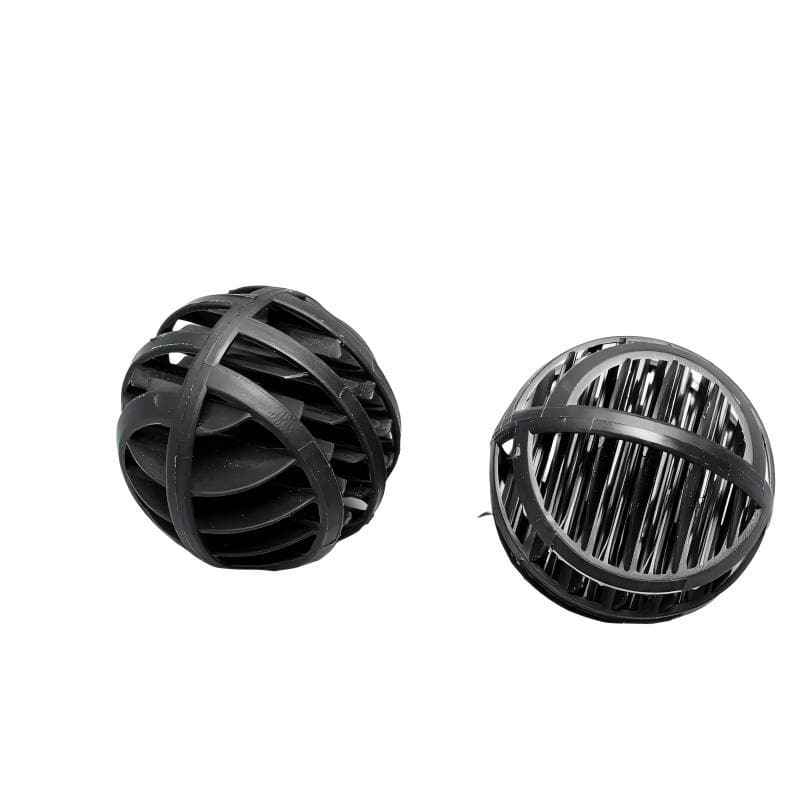
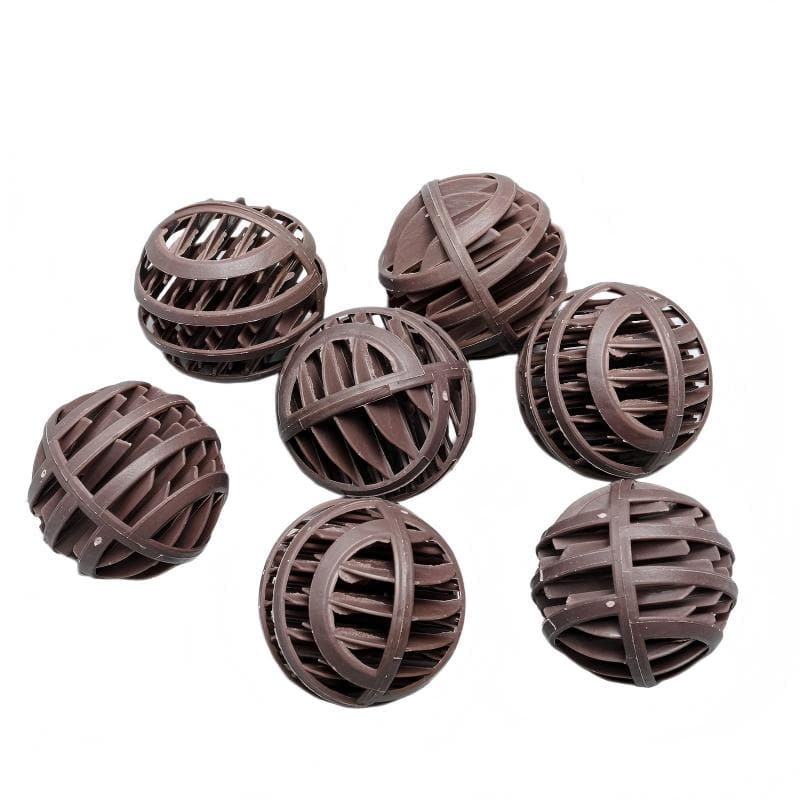
50mm PP Bio Balls for Biological Filtration
50mm PP bio balls for trickling filters, aquaculture and wastewater biofiltration. Open plastic media designed for biofilm attachment, water flow and easy handling.
50mm PP Bio Balls for Biological Filtration
HydroNovus 50mm PP bio balls are lightweight plastic media designed to provide attachment surfaces for biological growth while maintaining open passages for water and air.
They are primarily suited to fixed-bed, trickling and wet/dry biological filters used in aquaculture, pond filtration and selected wastewater treatment systems.
The open media structure allows water to pass through the filter bed without the dense packing associated with some granular media. For biological filtration, however, media selection should not be based on surface area alone. Hydraulic loading, organic or ammonia load, oxygen availability, solids entering the biofilter and the filter configuration all affect actual performance.
For projects requiring a continuously moving carrier bed, HydroNovus recommends evaluating purpose-designed MBBR media rather than assuming that conventional bio balls can be used as a direct substitute.
Where PP Bio Balls Fit in the Treatment Process
Bio balls are biological support media. They do not mechanically remove dissolved contaminants by themselves.
Their role is to provide a surface on which microorganisms can develop when suitable water quality, oxygen and hydraulic conditions are maintained.
A typical application may follow:
Solids Removal → Biological Biofilter with PP Bio Balls → Final Polishing / Return to System
In aquaculture and RAS applications, upstream solids removal is especially important. Excess feed, fecal solids and suspended material entering the biofilter can occupy open spaces and increase maintenance requirements.
For industrial wastewater, pretreatment should likewise be considered before biological filtration when the influent contains high suspended solids, oil, grease or inhibitory chemicals.
Suitable Applications
HydroNovus PP bio balls can be considered for:
- Trickling biological filters
- Wet/dry biofilters
- Pond and koi filtration systems
- Aquaculture biological filters
- RAS side-stream biofiltration
- Fixed biological filter chambers
- Selected industrial wastewater biofiltration stages
- Replacement or retrofit of existing plastic biofilter media
The final media quantity and filter configuration should be selected according to the biological load and hydraulic design rather than tank volume alone.
Why Use an Open PP Biofilter Media?
Open Flow Paths
The open plastic structure provides passages for water and, in trickling applications, air circulation through the media bed.
This is important because biological filtration depends not only on available attachment surface but also on bringing wastewater and oxygen into contact with the active biofilm.
Lightweight PP Construction
Polypropylene media are considerably lighter than mineral filter packing, making installation, handling and replacement easier, particularly in larger filter chambers.
Suitable for Trickling and Fixed Biofilters
The geometry is well suited to applications where the media remains largely stationary while water passes over or through the biological surface.
Simple Inspection and Maintenance
Individual plastic media can be visually inspected and handled without dismantling a dense mineral bed.
Maintenance frequency should be determined by the solids load entering the biofilter and the actual operating condition.
Bio Balls vs. MBBR Media
Bio balls and MBBR carriers are both plastic biological media, but they should not automatically be treated as the same product.
A conventional trickling or fixed biofilter keeps its media in a packed or relatively stationary arrangement.
An MBBR reactor uses carrier media that must move continuously through the biological tank under aeration or mechanical mixing. The carrier geometry, density, media retention screens and mixing conditions therefore become part of the reactor design.
For new moving-bed systems, use purpose-designed MBBR Biofilter Media.
For fixed or trickling biological filters where open flow paths and simple plastic media are required, 50mm PP bio balls may be the more practical option.
This distinction is particularly useful for EPC and RAS projects because the best media depends on the reactor configuration—not simply on which product has the largest published surface-area number.
Basic Product Information
Item | Specification |
|---|---|
Product | PP Bio Balls |
Material | Polypropylene (PP) |
Nominal Size | 50 mm |
Media Type | Open-structure biological filter media |
Primary Function | Biofilm support |
Typical Installation | Fixed-bed / trickling / wet-dry biological filtration |
Applications | Aquaculture, pond filtration, RAS support biofilters and wastewater treatment |
Quantity | Selected according to project loading and filter configuration |
What Determines Biofilter Performance?
The biological performance of a biofilter cannot be determined from media size alone.
For wastewater applications, the important design data normally include organic loading, ammonia loading where nitrification is required, water temperature, dissolved oxygen, hydraulic loading and the quality of water entering the biofilter.
For aquaculture systems, feed rate, biomass, TAN load, operating temperature, flow through the biofilter and upstream solids removal are particularly relevant.
A larger quantity of media is not automatically a better design. The media must receive adequate water distribution and oxygen while avoiding excessive solids accumulation.
Information Needed for Media Selection
For a preliminary recommendation, send HydroNovus:
For aquaculture / RAS: system volume, recirculation flow, fish species, biomass or production target, daily feed rate, water temperature, TAN target and existing solids-removal process.
For wastewater: average and peak flow, COD/BOD, ammonia where relevant, TSS, temperature, treatment target, available filter volume and existing process.
We can then help determine whether the project is better suited to PP bio balls, conventional MBBR carriers or hydrophilic sponge bio-media rather than selecting a carrier only from catalogue specifications.
FAQ
Are PP bio balls suitable for MBBR?
Not by default.
MBBR requires media that can remain in continuous motion and work with the reactor's aeration, mixing and retention-screen design. For a new MBBR reactor, purpose-designed MBBR carriers are normally the safer starting point.
Can bio balls be used in aquaculture?
Yes. Plastic biofilter media are widely used as supports for attached biological growth in aquaculture filtration systems. The biofilter must still be sized according to biological loading, flow, oxygen availability and operating temperature.
How much bio ball media do I need?
A reliable quantity cannot be determined from tank volume alone.
HydroNovus recommends using the expected organic or ammonia loading, filter configuration and operating conditions as the design basis.
Do bio balls remove suspended solids?
Their primary purpose is biological filtration, not primary solids removal.
Mechanical solids removal should normally take place upstream when significant suspended solids are present.
Do the media need replacement regularly?
PP media are intended for long-term use, but replacement intervals depend on the actual material condition and operating environment. HydroNovus does not recommend using a fixed service-life claim without reviewing the application.
Need Help Choosing the Right Biofilter Media?
Not every biological filter needs the same carrier.
Send us your flow rate, water quality, biological load, tank or filter dimensions and treatment target. HydroNovus can compare PP bio balls with MBBR carriers or hydrophilic sponge media and recommend the more appropriate direction for the project.