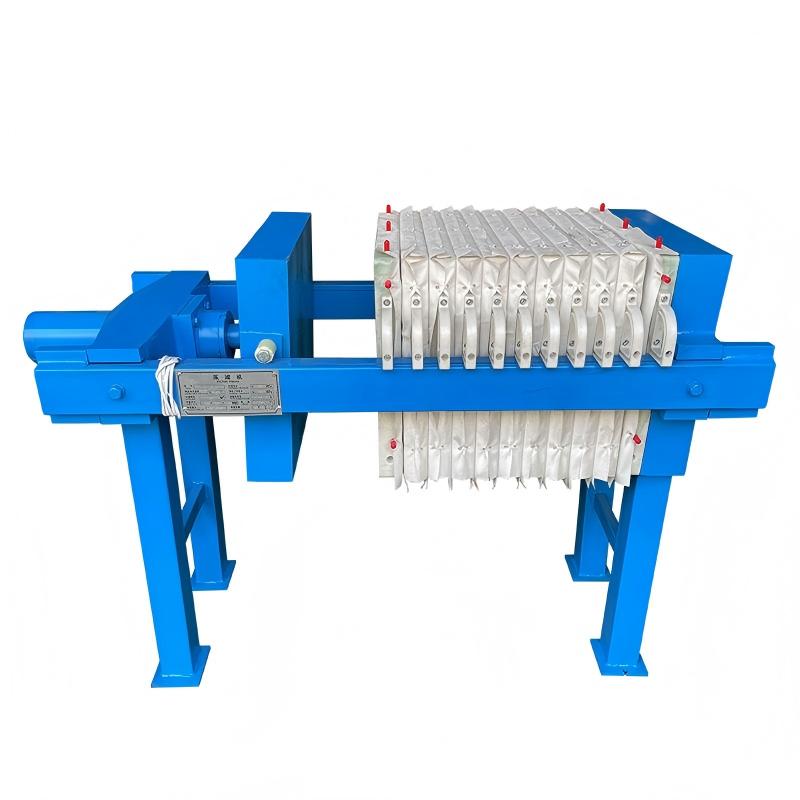
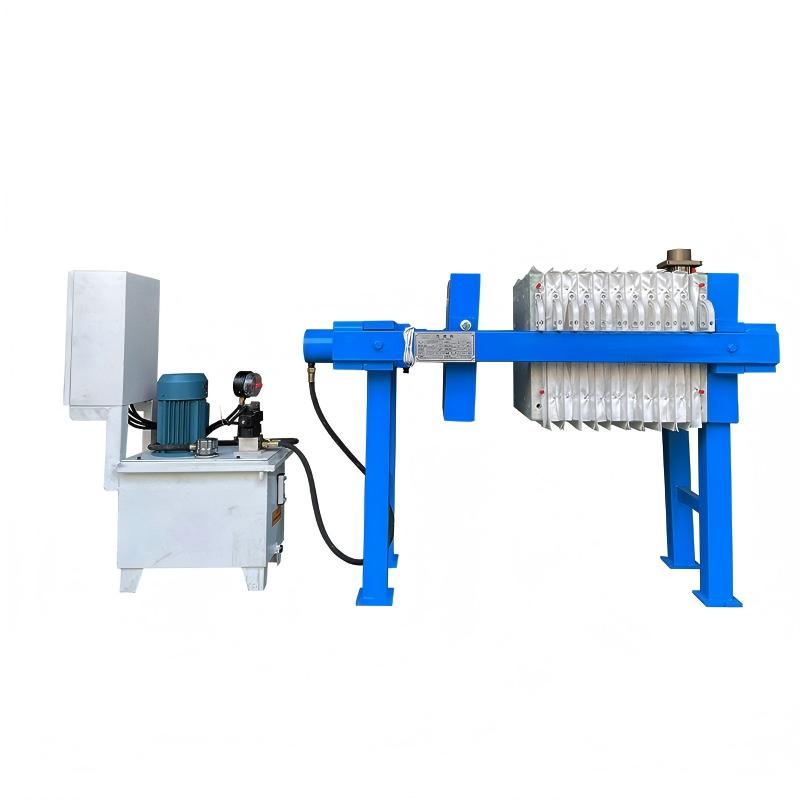
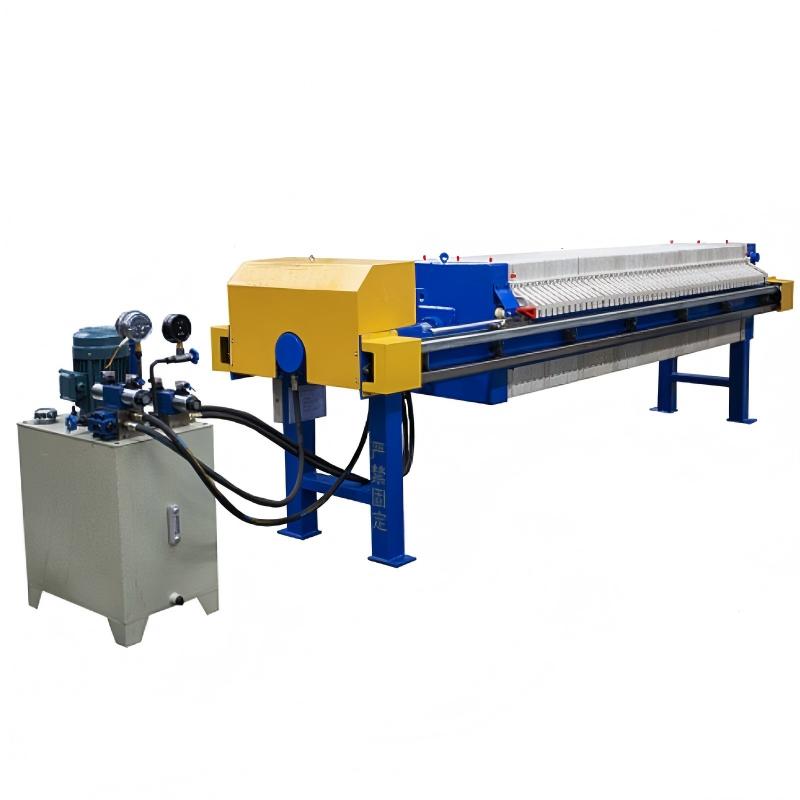
Chamber Filter Press for High-Solids Sludge Dewatering
Batch-operated pressure filtration system designed for applications requiring a relatively dry sludge cake and clear filtrate. Plate size, filtration area, feed pump, cloth material, and automation level are selected according to sludge characteristics.
CHAMBER FILTER PRESS FOR SLUDGE DEWATERING
PRODUCT OVERVIEW
HydroNovus chamber filter presses separate liquid from conditioned sludge by pumping it into recessed filter chambers under pressure. Solids accumulate on the filter cloth to form cakes, while filtrate exits through the plate drainage channels. The batch process is suited to applications where cake dryness and filtrate clarity are important.
CORE FEATURES
• Pressure filtration for relatively high cake-solids requirements.
• Multiple plate sizes and filtration areas for different capacities.
• Hydraulic plate closing and pressure-holding system.
• Filter-cloth material selected for sludge chemistry and particle characteristics.
• Manual, semi-automatic, or automatic plate handling options.
• Feed pump, cake conveyor, cloth washing, drip tray, and controls available.
TECHNICAL PARAMETERS
Filter plate type: recessed chamber or project-specific option
Plate size and quantity: selected according to filtration volume
Filtration area: model dependent
Operating pressure: determined by plate, pump, and sludge characteristics
Plate material: normally polypropylene; confirm for chemical compatibility
Filter cloth: selected according to particle size, pH, temperature, and filtration target
Cycle time: dependent on sludge conditioning and cake formation
Cake solids and filtrate quality: verified from sludge characteristics and testing
APPLICATION SCENARIOS
• Municipal and industrial wastewater sludge
• Chemical and pharmaceutical sludge
• Mining and mineral-processing slurry
• Ceramic and stone-processing wastewater
• Metal-finishing and surface-treatment sludge
• Applications requiring batch filtration and relatively dry cake
SELECTION INFORMATION
Please provide daily sludge volume, feed solids, particle characteristics, sludge source, pH, temperature, current chemical conditioning, required cycles per day, target cake condition, filtrate requirement, and preferred automation level. Laboratory filtration testing is recommended for final cloth and cycle selection.
FREQUENTLY ASKED QUESTIONS
Q: What determines filter-press capacity?
A: Chamber volume, filtration area, feed concentration, cake thickness, filtration rate, cycle time, and daily operating hours all affect capacity.
Q: Which feed pump should be used?
A: Pump type is selected according to sludge properties, required pressure, flow profile, and chemical compatibility. Progressive-cavity, diaphragm, or other suitable pumps may be considered.
Q: How is filter cloth selected?
A: Cloth material and weave depend on particle size, pH, temperature, filtrate target, cake-release behavior, and cleaning method.
Q: Can the press operate automatically?
A: Yes. Hydraulic closing, pressure control, plate shifting, drip trays, cloth washing, cake conveying, and PLC control can be configured according to the project.
REQUEST ENGINEERING SUPPORT
Send your sludge data, required daily capacity, operating schedule, target cake condition, and automation preference. HydroNovus will recommend a preliminary plate size, chamber volume, feed pump, and accessory scope.