Foam on Top of Your Aeration Basin: Which Type It Is and What to Do First
Foam on an aeration basin is not one problem. Identify the foam type first — white, brown and greasy, or thick and stable — then fix the cause.
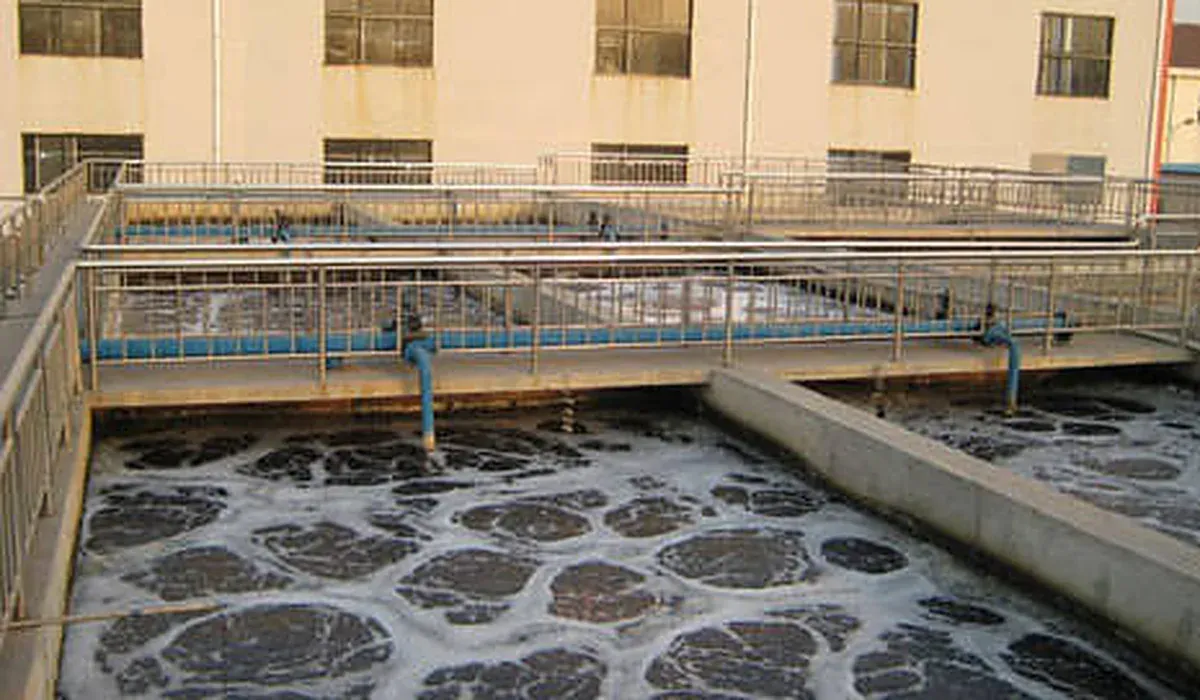
Foam on an aeration basin is not one problem, and that is why the usual first reaction — spray it down or dose a defoamer and move on — so often fails. There are three common foam types, each with a different cause, and the fix that clears one type can make another worse. Identify the foam first, then work on the cause: look at its colour and texture, check the sludge age and dissolved oxygen, and only then decide what to change.
The three foam types at a glance
| Foam type | What it looks like | Most likely cause | First action |
|---|---|---|---|
| White, billowing | Light, fluffy, soap-like; blows across the basin and off the surface | Surfactants in the influent, or a plant still starting up | Find the surfactant source; check the load, not the air |
| Brown, greasy | Thick, brown, sticky; clings to walls and walkways, does not blow away | Filamentous bacteria, often Nocardia, at a long sludge age | Check sludge age and wasting rate; reduce grease load |
| Thick, stable, pale | Dense, mousse-like, covers the basin and stays put | High MLSS with old sludge, or a sudden load change | Check MLSS, SVI and the food-to-microorganism ratio; adjust wasting |
White, billowing foam: surfactants or startup
White foam that looks like soap suds and drifts easily is the least alarming type, and the most common in industrial plants.
Surfactants in the influent. Detergents, cleaning chemicals, and some process chemicals lower the surface tension of the water, so the aeration bubbles form a stable foam instead of bursting. The foam often appears suddenly after a cleaning shift or a change in production. Ask the production team what was washed down, and when. If the foam started within hours of a cleaning event, you have your answer: the fix is at the source — intercept or dilute the discharge, and agree a rule with production about what may go to drain.
Startup foam. A new or recently re-seeded plant often foams white for the first days or weeks: the biology is not yet established, the mixed liquor is thin, and there is little biomass to break down the surfactants always present in small amounts in wastewater. This foam usually fades on its own as the biomass builds up — do not chase it with chemicals; track the MLSS and watch whether it is thinning week by week.
Brown, greasy foam: filamentous bacteria
Brown, greasy foam that sticks to basin walls and handrails is a different problem — a surface symptom of a sludge-age problem.
The usual cause is a filamentous organism, most often Nocardia or a similar actinomycete. These organisms grow as long, branching filaments with a waxy, water-repelling surface, and when they are abundant they stabilise foam. They thrive when the sludge age is long, the wastewater contains fats, oils and grease, and the temperature is warm.
How to confirm it. Look at the foam: brown, greasy, persistent, and it does not blow away. Then look at the sludge age and the wasting rate — if the plant has not been wasting enough and the sludge age has crept up, that is consistent. A microscope check of the mixed liquor, if you have access to one, settles it: Nocardia shows as branching filaments.
What to do. The fix is to shorten the sludge age by increasing the wasting rate, steadily, over days — not in one large step, which can wash out the biology. Reduce the grease load at source where you can: a grease trap that is not being emptied is a common hidden contributor. And check the temperature trend: Nocardia foam is often seasonal, worse in warm weather.
What not to do. Do not cut the air to kill the foam. Reducing aeration to stop foam also starves the biology of oxygen, and a plant with a filamentous problem and low oxygen is worse off than a plant with foam. Keep the dissolved oxygen where the process needs it and fix the sludge age instead.
Thick, stable foam: high solids or a load change
A dense, mousse-like foam that covers the basin and stays put usually points to the sludge itself: high MLSS, an old sludge, or a plant that has just taken a load change it has not adjusted to.
Check the numbers first. A conventional activated-sludge plant typically runs MLSS in the region of 2,000–4,000 mg/L — a typical range, not a design value for your plant; confirm against your own process design. If your MLSS has crept well above its normal band, the foam is a symptom of that drift, and the answer is wasting, not defoamer. Also check the SVI:
SVI (mL/g) = settled volume after 30 minutes (mL/L) × 1,000 ÷ MLSS (mg/L)
As a rough guide, an SVI around 100 mL/g is typical for healthy sludge, while values well above 150 mL/g suggest bulking or poor settling — treat these as indicators, not pass/fail limits.
If the load has risen — a production increase, a new waste stream — while the biomass has not, the ratio rises and the biology is stressed, which can show up as foam. The fix is either to grow the inventory by wasting less for a period, or to even out the load upstream. Our guide to MBBR shock load troubleshooting covers the same load-change logic for biofilm systems, and the principle is identical: a sudden change in load shows up as a surface symptom first.
A 15-minute check before you change anything
Work through this sequence before dosing anything or changing a setting:
- Look at the foam. Colour, texture, and whether it blows away or sticks — that alone usually narrows it to one of the three types.
- Check the dissolved oxygen. A typical target is around 1.5–2.0 mg/L in the aeration basin; confirm against your own design. Low oxygen causes many problems, but it is rarely the cause of foam on its own.
- Check the MLSS and the wasting rate. Has the MLSS drifted up? Has wasting been reduced or stopped? A long sludge age is the single most common thread behind persistent foam.
- Check what changed. A new cleaning chemical, a production change, a warmer week, a load increase. Foam that starts on a date usually has a cause on that date.
- Check the air distribution. Uneven aeration — one zone foaming while another is calm — can point to a diffuser problem rather than a biology problem. Our fine bubble diffuser fouling troubleshooting guide explains how to spot uneven air; if a replacement is on the table, the disc versus tube diffuser selection guide compares the two layouts.
What not to do
- Do not rely on defoamer as the fix. A defoamer knocks foam down for hours; it does not change the sludge age, the grease load, or the surfactant source. Use it to keep foam off a walkway while you fix the cause — not instead of fixing the cause. And check compatibility first: some defoamers add to the organic load or interfere with downstream processes.
- Do not cut the air. Starving the biology of oxygen creates a bigger problem than the foam.
- Do not waste sludge aggressively in one step. A sudden large waste can wash out the slow-growing organisms the plant needs, including the nitrifiers. Our MBBR ammonia troubleshooting guide explains what happens when nitrification is lost, and the recovery takes weeks, not days.
- Do not ignore the pattern. Foam that returns every Monday, every cleaning shift, or every warm spell is telling you its cause. A log of foam events against production and weather is worth more than any single test.
Change one thing at a time, and give it a full day before judging the result. Foam responds slowly to sludge-age changes — a wasting adjustment takes days to show in the foam, and judging it after an hour is how good fixes get abandoned.
Frequently asked questions
Why does my aeration basin foam only in the morning?
Foam that appears in the morning and fades during the day usually follows the production or cleaning cycle — an overnight discharge or a morning wash-down. Log the foam against the production schedule for a week; the pattern usually names the source.
Is foam on an aeration basin dangerous?
It is a nuisance and a warning, not an emergency in itself: foam on walkways is a slip hazard, and foam can carry over to the clarifier. Treat it as a signal, and fix the cause behind it.
How long does it take for foam to clear after I fix the sludge age?
Days, not hours. The sludge age changes gradually as you waste. If the foam is still there after a week of steady wasting at the new rate, the cause is probably not sludge age — re-check the grease load and the influent.
Can I just add more air to break the foam?
More air usually makes foam worse: it supplies more bubbles to stabilise the foam layer. Fix the cause instead.
The short version
Foam is a symptom, and the type of foam is the diagnosis. White, billowing foam points to surfactants or startup; brown, greasy foam points to a long sludge age and filamentous bacteria; thick, stable foam points to high solids or a load change. Identify the type, check the sludge age and the load, and change one thing at a time.
If you are seeing persistent foam and want a second opinion on your plant's numbers — MLSS, sludge age, and oxygen figures — our team can run a free sizing and quantity check. Reach us through the contact page.