Which Coagulant for DAF? PAC, Ferric or Alum — How to Choose
Choosing a coagulant for DAF: PAC, ferric salts and alum compared on pH, alkalinity, sludge and handling — and how to confirm the choice by jar test.
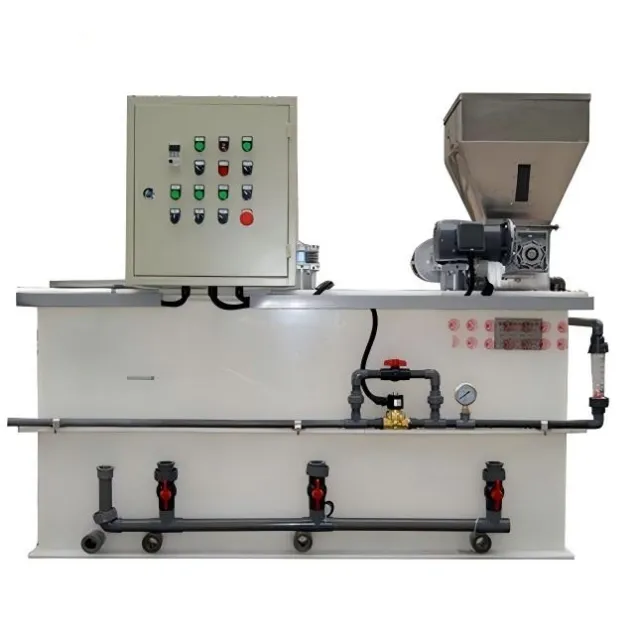
There is no universally "best" coagulant for a dissolved air flotation (DAF) unit — the right choice depends on your wastewater's pH, alkalinity, temperature and solids character. As a starting shortlist: PAC is usually the gentlest on pH and the easiest to handle, ferric salts are the workhorses for difficult, high-strength or phosphorus-bearing water, and alum is the low-cost traditional option where alkalinity is plentiful and sludge volume is not a constraint. Whichever you start with, the final decision should come from a jar test on your own wastewater, not from a catalogue.
What does the coagulant actually have to do in a DAF?
A DAF separates solids by floating them, not settling them, and that changes what you ask of the chemistry. The coagulant's job is to destabilise the fine, negatively charged particles, colloids and emulsified oils that would never attach to a micro-bubble unaided, and to start gathering them into small aggregates. A flocculant (polymer) then grows those aggregates into flocs large and open enough to catch bubbles and rise — but still light, because a dense floc that settles beautifully in a clarifier may float poorly in a DAF. Copying a choice from a settling plant, or from a neighbour's DAF on different wastewater, therefore often disappoints: flotation wants fast reaction, tolerance of pH swings, and flocs that want to go up.
PAC, ferric chloride, ferric sulfate and alum at a glance
The four coagulants you will meet most often in DAF service are polyaluminium chloride (PAC), ferric chloride, ferric sulfate and aluminium sulfate (alum). All four supply aluminium or iron that hydrolyses in the water and neutralises particle charge; they differ in how hard they pull on pH and alkalinity, and in what they leave behind.
| PAC (polyaluminium chloride) | Ferric chloride | Ferric sulfate | Alum (aluminium sulfate) | |
|---|---|---|---|---|
| Character | Pre-hydrolysed aluminium coagulant, usually a ready-to-use liquid | Iron-based, supplied as a strongly acidic, corrosive liquid | Iron-based, liquid or granular, acidic in solution | Traditional aluminium coagulant, liquid or dry, mildly acidic in solution |
| Strengths | Gentle on pH and alkalinity, so less correction chemical is often needed; effective over a comparatively wide pH band; fast floc formation; typically less chemical sludge than alum at comparable duty | Very effective on high-strength, coloured and phosphorus-bearing wastewater; dense, fast-forming flocs; performs well in cold water | Similar duty to ferric chloride; often chosen where it is the more available or economical iron source locally | Lowest purchase price in many markets; long track record; well understood by operators everywhere |
| Watch-outs | Higher price per drum than alum; quality and basicity vary between suppliers, so the product you tested is the one you must keep buying | Consumes the most alkalinity and pulls pH down hardest, so pH correction may be essential; corrosive to store and handle; can tint water yellow-brown if overdosed; adds chloride | Also consumes alkalinity and depresses pH; storage and materials need the same care as ferric chloride; can tint water if overdosed | Consumes significant alkalinity; narrower pH band; bulky, watery hydroxide sludge; performance drops in cold water more than the iron salts |
Two patterns matter most. First, the iron salts are the strongest and least forgiving: on a low-alkalinity wastewater the pH can fall out of the effective range unless you correct it. Second, PAC's pre-hydrolysed chemistry is why it is gentler — much of the alkalinity-consuming reaction has already happened in the drum — making it the usual first candidate for variable wastewater with limited pH control. Alum sits at the other end: cheap and familiar, but hungrier for alkalinity than PAC and the most sludge-producing of the four.
How do you choose for your wastewater?
Work through the factors in this order; the first two eliminate the most candidates.
pH and alkalinity of the incoming water. Measure both across a production cycle, not once, because industrial wastewater swings. If alkalinity is low or pH control is basic, favour PAC and treat the iron salts with caution unless you are prepared to dose alkali alongside. If alkalinity is ample and pH is stable, all four stay on the table. (Our guide to pH neutralisation and acid/alkali dosing covers the control side.)
What is actually in the water. Emulsified oils, fats and fine suspended solids are standard DAF duty for any of the four. Where dissolved colour, phosphorus that must be chemically captured, or a heavy colloidal load dominates, the iron salts usually earn their handling costs. Alum's performance also fades fastest as temperature falls; PAC and the ferric salts keep working in cold water.
The float sludge and what happens next. Coagulant choice follows you downstream. Iron-based sludge is denser; aluminium hydroxide sludge — alum's especially — is bulky and holds water, loading your thickening and dewatering step. If the treated water feeds a biological stage, residual metal and a depressed pH are process inputs, not just chemistry details. See polymer dosing for DAF and sludge dewatering.
Total cost, not drum price. Compare cost per cubic metre treated at the dose your jar test actually selects, including pH-correction chemical, sludge handling and disposal, and each product's storage and safety provisions. Ferric chloride's low drum price can be eaten by alkali dosing and corrosion-resistant storage; PAC's higher drum price can win back ground on all three. Confirm local stock, concentration and consistency between deliveries too.
When do you add a polymer, and where is it dosed?
A coagulant alone is often not enough for flotation. It neutralises charge and forms pinpoint micro-flocs; a polymer then bridges them into larger, open aggregates that present a big target for the micro-bubbles. Polymer is frequently what turns a cloudy outlet clear — or, when overdosed, what produces stringy, restabilised floc and a worse result than no polymer at all. It is the chemical most often overdosed on a DAF.
Sequence and location matter as much as selection. The standard arrangement is: coagulant first, into rapid, turbulent mixing (flash-mix chamber, static mixer or turbulent pipe section) so it disperses through the whole flow before it has finished reacting; pH correction, where fitted, acts at or just before this point; polymer second, downstream, into gentler mixing — a flocculation tube or low-shear tank — because its flocs are easily torn apart by pumps and turbulence. Avoid dosing polymer upstream of a high-shear pump, and give both chemicals enough contact time before the flow meets the recycle stream and its bubbles. Once the chemistry is settled, the tanks, pumps and pipework have to follow — see chemical dosing system sizing.
How do you confirm the choice? Jar test, then scale up
Shortlist two candidates — three at most — and let your own wastewater decide. Our step-by-step guide, DAF jar test: how to set pH, coagulant and polymer dose before flotation, covers how to run the test. Three selection-specific points are worth adding.
First, compare candidates at their own best conditions, not at one shared dose: each product gets its own dose ladder at your water's natural pH, and the ferric candidate may deserve a second run with pH correction, as it would really be operated. Second, judge the float, not just the water below it — a DAF lives or dies on whether the floc rises quickly and forms a coherent, stable blanket. Third, test across the day, not on one grab sample.
The dose ladder itself is a testing protocol, not a recommendation. One common structure is an example ladder of identical samples dosed in equal steps — a zero-dose control, then ascending steps of product (as supplied) — with the same mixing and observation routine in every beaker, so the only variable is the dose. Where water quality stops improving, refine with a tighter ladder. Converting the chosen dose to a plant feed rate is simple arithmetic — feed rate (kg/day) = dose (mg/L) × flow (m³/day) ÷ 1,000 — and our companion article on scaling jar-test results up to full-scale DAF dosing covers the scale-up checks. (Note: that companion article is being published in the same batch today, so its URL becomes live today as well.)
Finally, record the exact product name, supplier, concentration and form you tested, and buy that product. "Ferric chloride" and "PAC" are families, not specifications; a cheaper drum of the same name is an untested chemical.
Frequently asked questions
Which coagulant is most commonly used for DAF? PAC and ferric chloride are the two met most often in industrial DAF service — PAC where pH is variable or alkalinity is limited, ferric chloride where the wastewater is high-strength, coloured or carries phosphorus. Alum remains common on simpler, cost-driven duties with alkaline water. Common, however, is not the same as correct for your water.
Can I switch from alum to PAC without changing my dosing system? Often yes in principle — both are aluminium-based liquids dosed by similar pumps — but dose, pH behaviour and sludge volume will all change, and pump calibration must be checked against the new product's concentration and viscosity. Treat it as a new selection: jar test first, then trial on the plant before emptying the old tank.
Why does my DAF work in the morning and fail in the afternoon? Usually because the water changed, not the chemical: production cycles swing pH, alkalinity and load through the day, and a dose tuned on morning water may be wrong by the afternoon — particularly with alkalinity-hungry coagulants, where the pH sag quietly leaves the effective range. Log pH and alkalinity alongside performance for a few days before blaming the product; the fix may be pH correction, or a more pH-tolerant coagulant such as PAC.
Should the polymer be anionic or cationic for DAF? It depends on the surface chemistry left after coagulation, so polymer screening belongs in the same jar-test programme. Many DAF applications settle on a cationic or lightly charged emulsion polymer, but the right charge varies with the wastewater and coagulant. Test both families and pick on observed flotation behaviour, not on a catalogue description.
If you are specifying a new DAF or re-working the chemistry on an existing one, send us your wastewater data through the contact page for a free sizing, quantity and sample check — tell us the flow, the pH and alkalinity range, and what the water carries, and we will come back with the equipment and dosing arrangement we recommend, as the factory behind the DAF system.