Flicks or Flakes in DAF Effluent: What Causes Them and How to Fix Them
Flicks in your DAF effluent are usually floc fragments escaping the float layer. Work through dose, shear, air release and hydraulics in order.
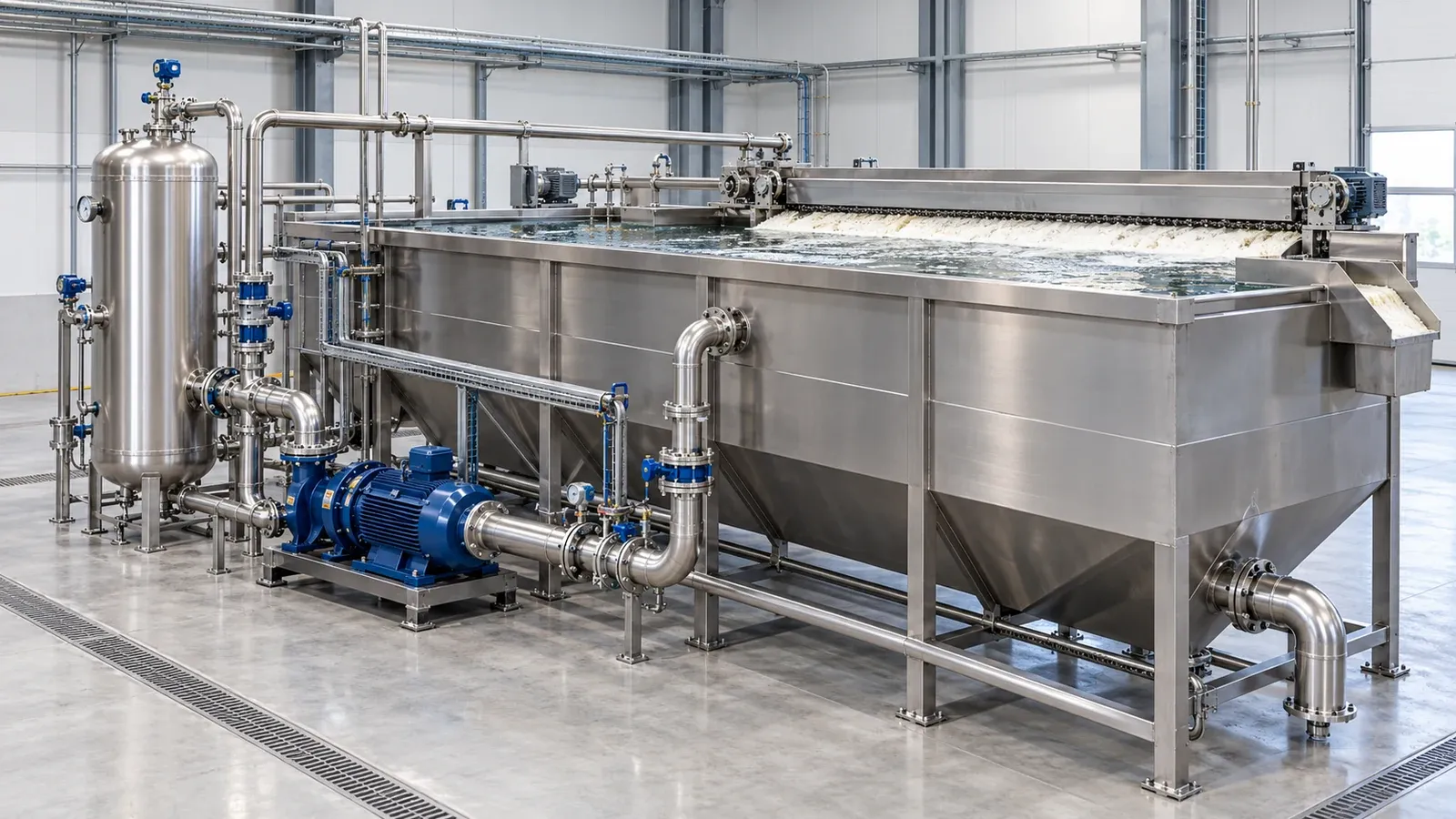
Small white or grey flakes — operators call them flicks — in your DAF effluent usually mean one thing: fragments of floc escaping the float layer instead of being skimmed off with it. The floc formed and the air attached, and then something broke the floc apart or carried it past the float layer. Work through the causes in order — dose, shear, air release, hydraulics — changing one thing at a time; changing two at once is how a flick problem turns into a week of guessing.
What flicks actually are
A DAF attaches tiny air bubbles to coagulated solids so they float, and a skimmer removes them as a float layer. Flicks are pieces of that layer that never made it to the skimmer: small floc fragments that stayed in the water and were carried over the effluent weir.
They differ from the cloudiness covered in our DAF cloudy effluent troubleshooting guide: cloudy effluent is usually fine solids that never formed floc at all, while flicks are floc that formed and then failed — and the fix for unformed floc is different from the fix for broken floc.
Tell them apart with a jar: collect effluent in a clear jar and let it stand. Flicks show as discrete flakes, settling slowly or floating; a uniform haze that does not clear is more likely unsettled fine solids or an emulsion — start with the cloudy-effluent guide instead.
Cause 1: the coagulant or polymer dose is off
Check this first: it is the most common cause and the cheapest to test.
- Under-dosing. If the dose is too low, the floc is small and weak: it may look acceptable in the flocculation tank and then break apart in the DAF cell, usually with a thin, watery float layer.
- Over-dosing. Too much coagulant can re-stabilise the solids, and too much polymer makes a sticky, stringy floc that tears rather than floating cleanly — and shows up as a rising chemical bill for no improvement.
- Wrong dose for today's water. Influent strength changes with production — a dose that was right last week can be wrong today, especially in food processing or any plant with batch discharges.
How to test it: run a jar test on fresh influent — our guide to coagulation and flocculation before DAF, including jar testing explains the procedure. If it shows a clean, strong floc at a different dose, change the plant dose in a single step, then watch the effluent for a full float-layer cycle before judging the result.
Cause 2: the floc is being sheared apart
Floc is fragile: any sudden shear between the flocculation tank and the float layer can tear it into fragments small enough to pass through as flicks. Common shear points:
- A pump between flocculation and the DAF cell. A centrifugal pump at high speed is the classic culprit — if the flocculated water is pumped, the pump is almost always the first suspect.
- High-velocity pipework or sharp bends. Short runs of small-diameter pipe, partially closed valves, or a sudden drop into the cell can all break floc.
- Aggressive mixing in the flocculation tank. Flocculation needs gentle mixing; if the mixer speed was raised for a load spike and never turned back down, the floc may be forming and breaking in the same tank.
- The recycle stream entering too violently. The pressurised recycle carrying the micro-bubbles must be introduced gently, so the bubbles attach to the floc rather than tearing it apart.
How to test it: look at the floc at each point along the path — flocculation tank, DAF inlet, cell. If it looks strong in the tank and fragmented at the inlet, the damage is happening in between: the pipework or pump between those two points is where to look. If it is already weak in the tank, go back to Cause 1.
Cause 3: the air release is wrong
The bubbles have to be small, numerous and evenly distributed — when they are not, floc does not attach properly and fragments escape.
- Saturator pressure too low. Fewer, larger bubbles attach poorly and rise too fast, disturbing the float layer.
- Saturator pressure too high. Very fine bubbles can be carried past the float layer, and excess turbulence at the release point can break floc.
- Recycle rate too low. Too little air means some floc never gets a bubble and sinks or drifts instead of floating.
- Recycle rate too high. Too much recycle raises the upward velocity and can push floc fragments over the weir before they join the float layer.
- Blocked or worn release nozzles. Uneven bubbles show as patches of good float next to escaping floc.
Our article on DAF recycle ratio, saturator pressure and air release explains how these settings interact. Change one setting at a time, watch the float layer and the effluent for a full cycle, then decide.
The air-to-solids ratio calculation is the right check when the solids load has changed: if the load has risen and the air supply has not, the ratio has fallen, and the symptoms will look like a chemistry problem when they are really an air-supply problem.
Cause 4: hydraulic or solids overload
Even with good floc and air, a DAF cell has a limit on how much water and solids it can pass in an hour. Flicks appear when that limit is exceeded:
- Flow above the design rate. Upward velocity rises, residence time falls, and floc that would have floated at design flow is carried over the weir.
- Solids load above the design rate. A thicker float layer is harder to skim cleanly, and the skimmer may leave fragments behind that break up and escape.
- Skimmer problems. A skimmer running too slowly, set at the wrong height, or with a damaged blade leaves float behind, which breaks down and shows up as flicks — sometimes hours after the skimming failure.
- Short-circuiting. If the inlet distribution is damaged or sludge has built up in a corner, part of the flow can pass through the cell too quickly, carrying floc with it.
Check flow and solids load against the design figures first — if either is above design, the fix is load management, not chemistry. Then watch the skimmer through a full cycle: it should remove the float layer cleanly and leave clear water behind it.
A step-by-step diagnostic sequence
Use this order — cheapest, most common cause first — so you never change two things at once.
| Step | Check | What you are looking for | If it fails |
|---|---|---|---|
| 1 | Jar test on current influent | Strong floc at the plant dose | Adjust coagulant / polymer dose |
| 2 | Floc at each point | Floc intact from tank to inlet | Find the shear point: pump, valve, bend |
| 3 | Saturator pressure, recycle rate | Steady pressure, even bubbles | Correct one setting at a time |
| 4 | Air-to-solids ratio vs design | Ratio in range for today's load | Increase air or reduce solids load |
| 5 | Flow and solids load vs design | Both within design | Manage the load; check for short-circuiting |
| 6 | Skimmer operation | Clean removal, clear water behind blade | Adjust speed, height or repair blade |
Work the steps in order and give each change a full float-layer cycle before judging it. If the flicks clear after step 1, you have saved yourself a saturator adjustment. If they persist through step 6, the problem is likely structural — inlet distribution, cell geometry or a sustained overload — and that is the point to bring in the equipment supplier with the operating data in hand.
When you do bring in a supplier, the data they will ask for is the same data that makes a quotation comparable: flow, influent solids and chemistry, current chemical doses, saturator pressure, recycle rate, and the effluent quality you need to hit. Our DAF RFQ data sheet guide lists the full set — collect it before the call and save a round of questions.
Frequently asked questions
What are flicks in DAF effluent?
Flicks are small flakes of floc that escaped the float layer and were carried over the effluent weir — floc that formed and then broke apart or failed to float. They differ from general cloudiness, which is usually fine solids that never formed floc at all.
Why does my DAF have flakes in the effluent when the jar test looks good?
A good jar test rules out the chemistry. The usual remaining causes are shear between the flocculation tank and the cell (often a pump), wrong saturator pressure or recycle rate, or hydraulic overload. Check the floc at each point: strong in the tank but fragmented at the inlet means the damage is happening in between.
Can too much polymer cause flicks in DAF effluent?
Yes. Over-dosing polymer produces a sticky, stringy floc that tears instead of floating cleanly, and over-dosing coagulant can re-stabilise solids. If the float layer looks thick but tears easily, step the dose down in a jar test before changing anything mechanical.
How do I stop flakes coming over the DAF effluent weir?
Work in order: confirm the dose with a jar test on current influent, remove shear points, correct one air setting at a time, check the air-to-solids ratio and the flow against design, and watch the skimmer through a full cycle — judging each change over a full float-layer cycle.
Need a quantity or sizing check? Contact us for a free sizing, media quantity and sample check — send your flow, solids load and current doses, and we will work out the DAF sizing and the data your quotation needs.