Industry Solutions
Specifying a DAF in an RFQ: The Data Sheet That Gets You Comparable Quotes
A DAF RFQ without flow, solids, FOG and discharge data gets you quotes you cannot compare. Use this data sheet to get like-for-like prices.
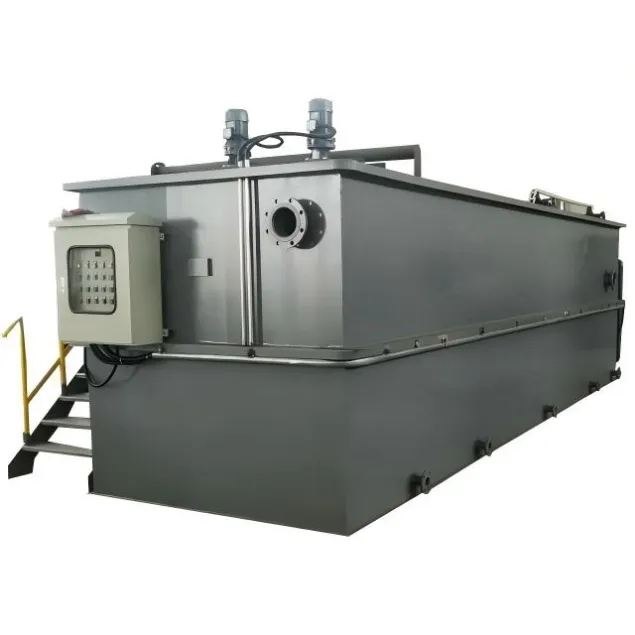
The fastest way to waste a month on a DAF purchase is to send out an RFQ that does not contain enough information. Suppliers will still quote — but each one will fill the gaps with different assumptions, and the prices that come back will describe different machines. The cheapest quote then usually turns out to be the one that assumed the easiest wastewater, and the comparison you wanted never happens.
A good DAF data sheet does one job: it makes every supplier price the same duty. It does not need to be long. It needs to be complete on the handful of items that actually drive the size, the chemistry, and the price of the unit.
The flow data suppliers actually size from
Flow is the first number every supplier asks for, and it is the one most often given wrong. Three figures are needed, not one.
Average flow sets the daily duty and the chemical consumption. Peak flow sets the hydraulic limit: the unit must still float solids and hold its effluent quality during the worst hour, not just across the average day. The flow pattern — continuous, batch, or strongly variable across shifts — decides whether the unit needs equalisation ahead of it or can take the stream directly.
Give the units plainly and state the basis: cubic metres per hour for peak, cubic metres per day for average, and the hours per day the plant actually discharges. A supplier who only receives a daily total has to guess the peak, and that guess becomes a hidden difference between quotes. State any planned production increase as well: a unit sized exactly to today's flow with no margin becomes a bottleneck the year the plant expands. If the stream is not yet flowing — a new line, a plant still in design — say so, and give the design flow the process engineer has calculated, with the assumptions behind it.
The wastewater characterisation that decides the design
After flow, the numbers that change the design are the solids and the fats. Give suppliers the following, measured rather than guessed wherever possible:
- Total suspended solids (TSS) — average and peak, in mg/L. This drives the solids load, which is the mass the air system must lift.
- Fats, oils and grease (FOG) — average and peak, in mg/L. High-FOG streams change the chemistry, the float handling, and sometimes the materials of construction.
- pH — the normal operating range and the extremes. pH decides the coagulation chemistry, and a stream that swings widely may need neutralisation ahead of the DAF.
- Temperature — the normal range and the extremes. Hot streams change air solubility, chemistry, and materials; cold streams change floc behaviour.
- COD or BOD — useful context for where the DAF sits in the treatment train, but not the sizing driver on its own. State it if it is measured.
- Anything unusual in the stream — solvents, surfactants, cleaning chemicals, high salinity, fine mineral solids, or anything that could interfere with flocculation or attack materials. A surfactant the supplier does not know about can undo the whole design, and it costs nothing to disclose.
If laboratory data is limited, say what was actually measured and what is an estimate. A short table with measured values marked as measured and the rest marked as estimated is better than a long table of numbers nobody can stand behind. Where jar testing has already been done — for example, following our guide to coagulation and flocculation before DAF — include the results: the coagulant and polymer type, the dose that worked, and the pH window it worked in.
The discharge target — the number the whole design is judged against
A DAF is bought to meet a limit, so the RFQ must state the limit. Give the discharge standard by name where one applies — the local regulation, the municipal sewer acceptance limit, or the client's own internal standard — and the numeric limits for the parameters that matter: TSS, FOG, and any others the permit names.
State also what happens after the DAF. Is it the final step before discharge, or does a biological stage follow? That changes the target: a DAF ahead of an MBBR or activated sludge stage is sized to protect the biology, which is a different job from meeting a final discharge limit on its own. If a biological stage follows, name it and give its key constraints, such as the maximum FOG or solids load it can accept.
Be careful with one common mistake: asking suppliers to "guarantee" removal percentages without giving them the inlet data above. A percentage without an inlet concentration is meaningless — removing 90% of 100 mg/L and 90% of 5,000 mg/L are entirely different machines. Give the inlet numbers and the outlet limit, and let the supplier state what their unit is designed to achieve on that duty.
The site and utility facts suppliers forget to ask about
The unit has to fit, run, and be maintained where it will actually sit. Include these in the RFQ, because they are the items most often discovered late, when the price has already been agreed. One more worth stating honestly: who will run the unit, and how much attention it will realistically get. A unit that needs daily jar testing and careful dosing will not perform in a plant with no laboratory and one part-time operator; the supplier can then propose the level of automation that matches.
- Available footprint and height — length, width, and any height limit, plus access for delivery and later removal.
- Indoor or outdoor installation — outdoor duty changes covers, insulation, heating, and materials.
- Power supply — voltage, frequency, and phases available at the site.
- Compressed air — whether plant air is available, and at what pressure, or whether the DAF must supply its own.
- Water for dilution and cleaning — availability and quality, since chemical make-down needs a reliable supply.
- Sludge destination — where the float goes: a thickening tank, a dewatering press, or direct disposal. This decides what the sludge handling on the unit must deliver.
What to ask each supplier to return — so the quotes can be compared
The RFQ should tell suppliers exactly what to include in their offer. Ask for the same items from everyone:
Item to request | Why it matters for comparison |
|---|---|
Design basis stated in the offer | Shows which of your numbers the supplier actually used |
Hydraulic and solids loading rates | The two rates that decide whether the unit is sized generously or tightly |
Air-to-solids ratio used in the design | |
Footprint, height, and weight | Decides whether the unit fits the space you actually have |
Power consumption by item | Blower, pumps, skimmer, mixer — separately, not one lumped figure |
Chemical consumption at design load | Coagulant and polymer dose and daily use, so running cost can be compared |
Float solids handling and sludge volume at design load | What leaves the unit each day, and in what condition |
Materials of construction | Tank, internals, and wetted parts — especially for corrosive or hot streams |
Scope split: what is included and what is not | Piping, installation, commissioning, spares, documentation — the usual source of "cheap quote, expensive project" |
Delivery time and warranty terms | Stated plainly, on the same basis from every supplier |
A supplier who cannot or will not provide the loading rates and the air-to-solids ratio has not really designed the unit for your duty. That in itself is useful information.
Reading the quotes when they come back
When the offers arrive, compare them against the data sheet before comparing prices. First check that each supplier used the same design basis — the same peak flow, the same peak TSS, the same discharge limit. Any quote built on different numbers is not comparable, and the supplier should be asked to re-price on your stated basis before any further discussion. Then look at the loading rates and the air balance, not the headline price. A unit with a much smaller footprint for the same duty is either more cleverly designed or more tightly loaded, and the loading rates will tell you which. Finally, check the scope split line by line. Installation, commissioning, operator training, spares, and documentation are where cheap quotes quietly become expensive projects. The full list of data a supplier needs for a proper sizing is covered in our DAF system sizing data guide — use it as a cross-check on whether an offer is complete.
If one quote is far below the others, do not celebrate yet. Ask what was assumed differently. In most cases the answer is a lower peak flow, a lower solids load, or a scope that stops at the factory gate.
FAQ
What information does a supplier need to quote a DAF?
At minimum: average and peak flow with the flow pattern, TSS and FOG (average and peak), pH and temperature range, the discharge limit the unit must meet, and what follows the DAF in the treatment train. Site, utility, and sludge-destination facts should be included too.
Why do DAF quotes for the same project vary so much?
Because each supplier fills missing information with different assumptions. One may size on your average flow and another on your peak; one may assume a low solids load and another a high one. A complete data sheet forces every supplier to price the same duty, which is what makes the prices comparable.
Should I ask suppliers to guarantee a removal percentage?
Ask for the outlet quality they design for, against your stated inlet data and discharge limit. A percentage without an inlet concentration is meaningless — the same percentage on a dilute stream and a concentrated stream describes very different machines.
Not sure your data sheet is complete?
Send us your flow figures, wastewater data, and discharge target via our contact page. We will run a free first-pass check on whether the data is enough for suppliers to quote on a comparable basis, and flag what is still missing. The DAF systems we supply come from makers we work with directly, and sizing support for a specific project is arranged case by case.