Same MBBR Media, One Tank Grows Biofilm and the Other Doesn't — Why?
Same MBBR media, one tank grows biofilm and the other doesn't? The media is not the problem — compare the tanks: air, oxygen, temperature, feed split.
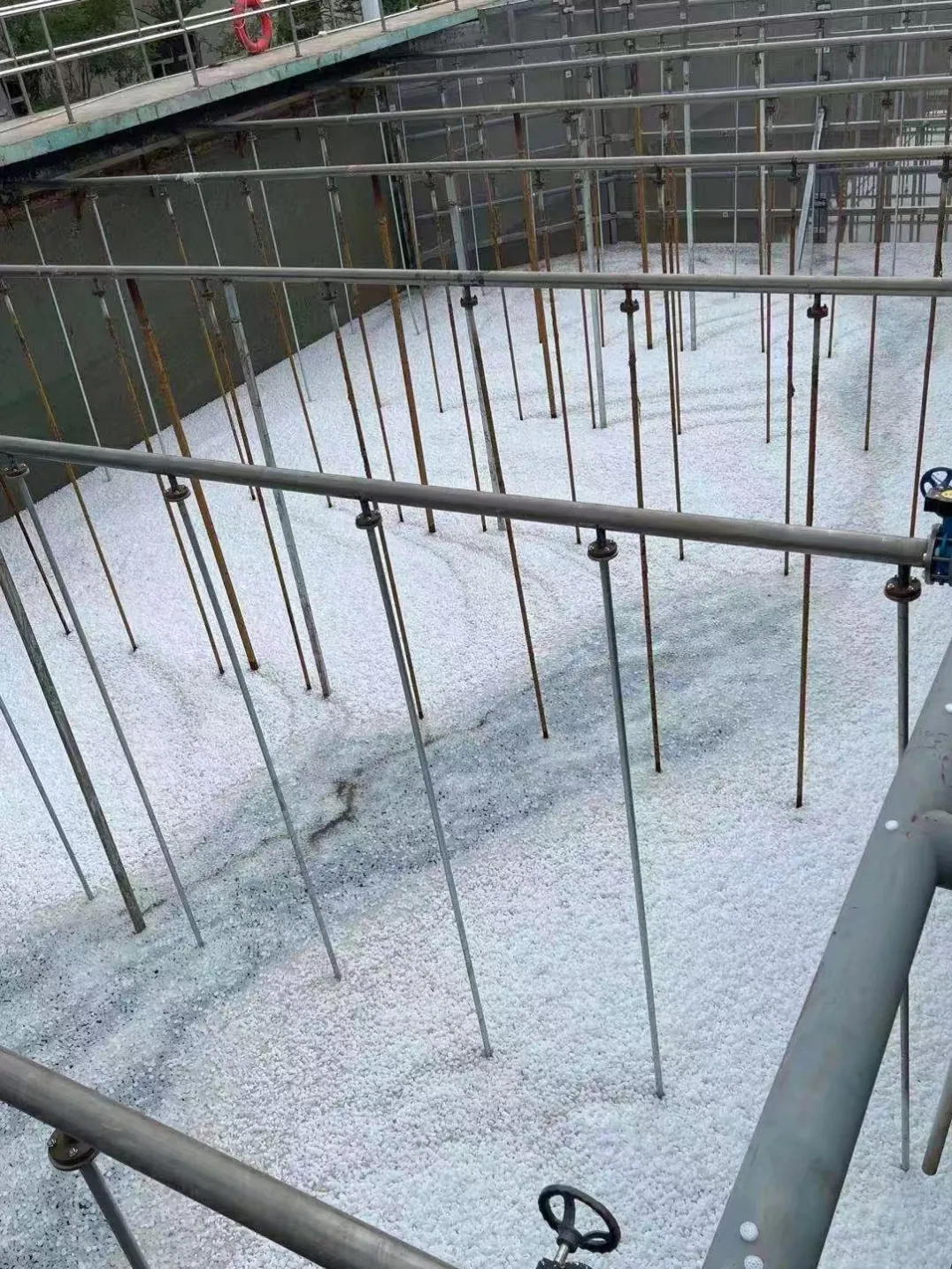
If the same batch of MBBR media grows biofilm in one tank and not in the other, the media is almost certainly not the problem. The same carriers, the same wastewater, the same age — and two different results. That pattern points at the tanks, not the plastic: something differs between them, and the fastest way to find it is to compare the two tanks side by side, measurement by measurement, instead of treating the slow tank on its own.
Rule out the media first — in five minutes
Before touching either tank, confirm that the media really is the same. Check the batch and the model on both tanks: HNS MBBR media is 100% virgin HDPE with a density of 0.96–0.98, and the catalogue surface areas are MBBR19 above 650, MBBR37 above 800, MBBR40 above 900, MBBR64 above 1,200, MBBR76 above 1,600, MBBR04 above 900, MBBR05 above 1,000 and MBBR06 above 800 m²/m³. If both tanks hold the same model from the same delivery, surface area cannot explain the difference — stop blaming the media and look at the tanks. Two things are worth confirming while you are there: that the filling ratio is in the normal 15–65% range in both tanks, and that neither tank has lost media through a damaged retention screen. Our MBBR media selection guide explains why protected surface area, not the headline number, is what the biofilm actually lives on.
If the media was moved between tanks, check its history instead. Media that was dried out, stored in the sun, pressure-washed or exposed to a cleaning chemical carries that history with it, and a tank filled with cleaned media will lag a tank filled with media that never left the water. That is a history difference, not a media-quality difference, and it is fixed by time, not by replacing the media again.
Air and mixing: the most common difference
The first real difference to check is air distribution, because it is the difference most often found. MBBR carriers only grow biofilm well when they are kept moving: the movement brings food and oxygen to the film and knocks off the excess so the film stays thin and active. A tank with uneven air has dead zones where carriers sit still, and carriers that sit still grow little or nothing.
Compare the two tanks directly: stand over each one and watch the carriers for a full minute. In the good tank the media should roll evenly across the whole surface; in the slow tank look for a quiet corner, a still patch, or carriers piled on one side. Then check the air itself — the air flow to each tank if there are separate valves or meters, the diffuser condition, and whether one tank's diffusers are partly blocked. Our MBBR aeration sizing guide covers how air is split between mixing and oxygen supply, and why the two jobs compete for the same air.
Also check the fill ratio again here, tank by tank. A tank filled near the top of the range moves differently from one at the bottom: too much media and the bed packs and stops rolling; too little and the carriers race around without enough contact time.
Oxygen, temperature and load: the water is not the same in both tanks
"Same wastewater" is usually true at the inlet and often false inside the tanks. Measure dissolved oxygen in both tanks at the same depth and the same time of day: if the slow tank runs lower, the biofilm there is oxygen-limited even though the feed is identical. Low oxygen is a common cause of slow colonisation, and it is usually an air problem (see above) or a load problem (see below), not a media problem.
Temperature is the next comparison, and it matters more than most operators expect: nitrifiers and heterotrophs both grow more slowly in cold water, and a tank that is a few degrees colder — because it sits in the shade, is outdoors, or receives a cold side-stream — will lag a warmer twin by days or weeks. Normal membrane formation on MBBR media takes 3–15 days under good conditions; in cold water, expect the slow end of that range and beyond.
Then check the load split. Two tanks fed from a common header rarely receive exactly half the flow each: a partially closed valve, a different inlet arrangement, or one tank receiving a recycle stream the other does not can leave the slow tank starved or overloaded. A starved tank grows little biofilm because there is little food; an overloaded tank grows little because the biology cannot keep up and the film sloughs. Measure the flow to each tank if you can — the same load-change logic in our MBBR shock load troubleshooting guide applies here, tank by tank.
Chemical and toxic events: the difference you cannot see
If air, oxygen, temperature and load all match and the tanks still differ, look for an event, not a condition. A chemical spill, a cleaning discharge, a slug of disinfectant or a toxic shock that entered one tank and not the other will strip or prevent biofilm in that tank while the twin carries on normally. Ask the production team what went to drain in the last two weeks, and check whether one tank was isolated, bypassed or cleaned during that period.
Also consider pH and alkalinity, tank by tank: a tank receiving an acidic side-stream, or one whose alkalinity has been consumed by nitrification without top-up, can sit at a pH that slows colonisation while the twin stays in range. Test both tanks on the same day, with the same kit, and write the numbers down.
The side-by-side comparison table
| Check | Good tank | Slow tank | If they differ, suspect |
|---|---|---|---|
| Media model and batch | Recorded | Recorded | A media or history difference, not a tank difference |
| Filling ratio | % of tank volume | % of tank volume | Over- or under-fill changing the movement |
| Carrier movement | Even roll, full surface | Still patch or piling | Air distribution or diffuser blockage |
| Dissolved oxygen | mg/L, same depth and time | mg/L, same depth and time | Air supply or load imbalance |
| Temperature | °C | °C | Cold tank, shade, or a cold side-stream |
| Flow and load split | Flow to this tank | Flow to this tank | Valve, inlet or recycle difference |
| pH and alkalinity | Both numbers | Both numbers | Acidic side-stream or alkalinity crash |
| Recent events | Cleaning, spills, isolation | Cleaning, spills, isolation | A shock or cleaning that hit one tank only |
Work down the table and stop at the first row where the tanks genuinely differ. Fix that difference, then wait: biofilm does not appear the day the air is fixed, it appears over the following days as the bacteria recolonise. Normal membrane formation takes 3–15 days, and a tank that has been starved of oxygen or food for weeks may need the full span. Do not judge the fix after 24 hours, and do not change three things at once — if you fix the air, the load and the pH on the same day, you will never know which one mattered.
When the slow tank is the normal one
One last possibility: the "good" tank may be the exception. If it was seeded — with media from a running system, return sludge, or a bacterial product — and the slow tank was not, then the slow tank is simply following the normal colonisation curve and the good tank had a head start. Our MBBR startup and biofilm commissioning guide covers the normal sequence and how seeding changes it. In that case the answer is patience, plus the same side-by-side checks to confirm nothing else is wrong. HNS manufactures the MBBR media in its own factory — see the MBBR media product page — and a slow start in a never-seeded tank is a commissioning question, not a product question.
FAQs
Why is biofilm growing on MBBR media in one tank but not the other?
Because something differs between the tanks: air distribution, dissolved oxygen, temperature, flow split, or a chemical or cleaning event that hit one tank only. Compare the two tanks side by side with the table above; the media is the same, so the answer is in the tank.
How long does MBBR biofilm normally take to form?
Membrane formation on MBBR media normally takes 3–15 days under good conditions. Cold water, low oxygen or a starved tank can extend that considerably, so compare the slow tank against its twin rather than against a fixed number of days.
Can I move media from the good tank to seed the slow one?
Yes — moving a portion of colonised media is the most reliable way to seed a slow tank. Move only part of it, keep the good tank's fill in range, and fix the slow tank's air and oxygen first, or the moved media will starve the same way.
Should I replace the media in the slow tank?
Almost never, if the media is the same batch as the good tank's. Replacing media that is not the problem wastes money and restarts the colonisation clock. Fix the tank difference first and give the biofilm time to form.
Get a media quantity and sample check: if the comparison points to a fill or media question, tell us the tank volume, media model and filling ratio and we will check the quantity and a sample for you — contact us.