Specifying a 1,500 m³/day Sewage Treatment Package for Irrigation Reuse: The Data You Need First
What data does a supplier need before quoting a 1,500 m³/day sewage package for irrigation reuse? Flow, influent ranges, reuse target, site and scope.
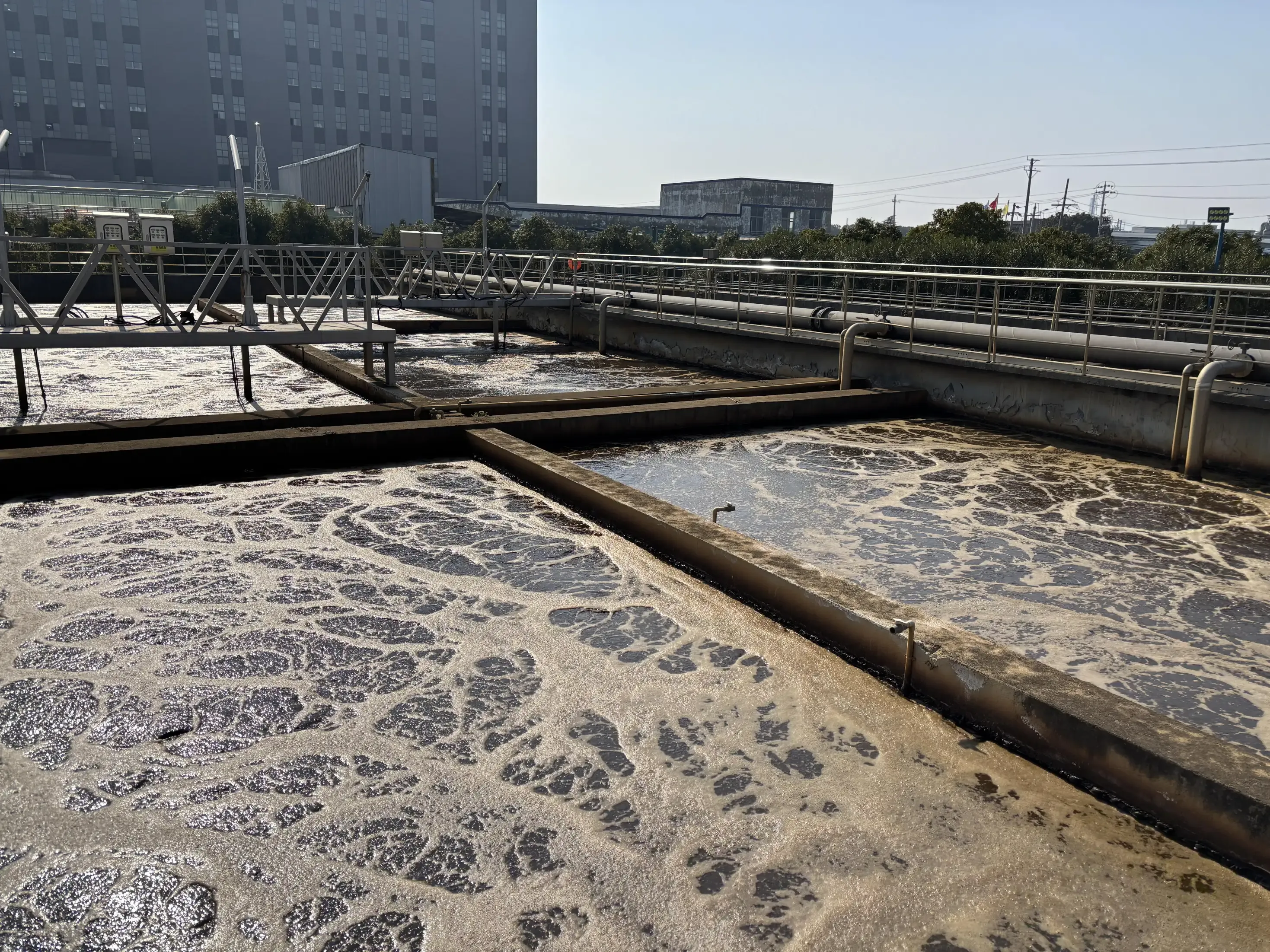
A supplier cannot size or price a 1,500 m³/day sewage treatment package from the flow figure alone. Before a meaningful specification or quotation is possible, eight groups of data have to be on the table: the flow pattern, the influent quality given as ranges, the reuse target set by your local irrigation standard, disinfection expectations, site and utility conditions, the sludge outlet, climate and material conditions, and a clear split of who supplies and who designs what. Send those eight groups with your inquiry and the quotation you get back will be based on your wastewater — not on assumptions. This checklist follows the same logic as our guide to the data required for a packaged wastewater treatment plant, adapted to domestic sewage with an irrigation reuse outlet.
1. Flow pattern: average, peak, seasonal — and equalisation
The headline figure is the average daily flow: 1,500 m³/day, which is an average of 62.5 m³/hour over 24 hours. Sewage almost never arrives at that steady rate. A residential or camp source typically peaks morning and evening and drops at night, so the supplier also needs the peak hourly flow — or at least the population or fixture count behind the estimate. Seasonal variation matters too: occupancy swings and phased handovers can leave a plant running far below design flow for months, which affects how the biological stage should be staged or split into trains.
State whether an equalisation tank is in the scope or already exists on site. Equalisation absorbs the peaks so the biological stage sees a steadier load, and its volume changes both tank sizes and price. Our article on equalisation tank sizing explains the reasoning; the same principles apply to domestic sewage. Metered records from an existing facility, even a few weeks of them, are worth more than a design estimate.
2. Influent quality: send ranges, not single values
The second group is what is in the water: BOD, COD, TSS, total nitrogen and ammonia, total phosphorus, and oil and grease. For domestic sewage these values move with water use — low consumption concentrates the sewage, high consumption dilutes it — so one laboratory result can mislead the design. Send a range, or several analyses from different days, and say how samples were taken.
Ranges matter because each parameter drives a different part of the package. BOD and COD set the biological load and therefore the reactor volume and the biofilm media quantity. Media volume is worked out from the load and the carrier's protected surface area — our MBBR media is 100% virgin HDPE with a filling ratio of 15–65%, and protected surface areas run from over 650 m²/m³ (MBBR19) to over 1,600 m²/m³ (MBBR76). Nitrogen figures decide whether a nitrification (and possibly denitrification) duty has to be designed in; phosphorus decides whether a chemical removal step is needed as well. Our MBBR media volume calculation guide sets out the method step by step. Oil and grease should be low in purely domestic sewage; if a canteen, workshop or laundry shares the line, say so — it changes the pre-treatment.
3. The reuse target: your local irrigation standard decides
Irrigation reuse is not a single quality. The treated water has to meet the irrigation reuse standard that applies in your country or municipality, and those standards differ from place to place — in the parameters they regulate, in how they distinguish between crops and irrigation methods, and in how compliance is sampled. This article deliberately prints no limit values: quoting numbers from another jurisdiction's standard would be worse than useless, because the design would be built around the wrong target.
What the supplier needs from you is the standard itself, or at minimum its parameter list for your reuse application. If the standard is not yet confirmed, say so openly: a package can be specified with the stages reuse normally requires, but treat the quotation as preliminary until the target is fixed in writing.
4. Disinfection expectations
Because the treated water goes to irrigation, disinfection is part of the specification, not an afterthought. State what your local standard or project specification expects: the disinfection method if one is prescribed (for example ultraviolet or chlorine-based), whether a disinfectant residual is required in the stored water, and the treated-water storage between the plant and the irrigation network. Storage time, tank cover and sunlight exposure all affect whether disinfected quality holds until the water is used, so include the storage arrangement in the data set.
5. Site, power and water utilities
Provide the plot dimensions and layout constraints, ground conditions if known, and the positions of the inlet sewer and the treated-water outlet. Confirm the power supply — voltage, frequency and phases — and whether a standby generator exists or must be allowed for, since blowers and pumps are specified against it. Potable or service water availability matters for washdown and for any chemical make-up. State access for delivery vehicles and a crane as well: it influences whether the package is better supplied as skids, containerised units or site-assembled tanks.
6. Sludge handling: where does the solids stream go?
Every biological plant produces sludge, and at 1,500 m³/day the quantity is a daily operating reality, not a footnote. State the intended outlet before the package is specified: tanker removal by a licensed contractor, on-site drying beds, or mechanical dewatering with the cake collected for disposal. The choice changes the scope — a sludge holding tank, and possibly a dewatering unit such as a screw press, may need to be included in the package rather than turning up as an extra later. Also state who accepts the sludge or cake at the receiving end, since that can impose its own conditions.
7. Climate and materials
Give the site temperature range across the year: biological treatment rates fall in cold weather, while very hot climates raise questions about equipment cooling, odour control and how treated water behaves in storage. If the site is coastal or the groundwater is saline, say so — corrosion protection and material selection (for example between coated carbon steel, stainless steel grades and FRP) depend on it. Wind, dust and seismic requirements, where they apply, complete the picture.
8. Commercial scope: what exactly is being quoted?
The last group is not technical, but it decides whether quotations can be compared at all. State the battery limits you expect: which units are inside the package, whether inlet and outlet pipework, cabling, and treated-water storage are included, and what documentation, spare parts and operator training you expect with the delivery. Two quotations for "a 1,500 m³/day plant" can differ widely in scope while looking similar on the headline page; a written scope split is what makes them comparable.
The checklist at a glance
| Data item | Why the supplier or designer needs it |
|---|---|
| Average and peak flow, seasonal pattern | Sizes the units, decides staging and train split |
| Equalisation: included, existing, or none | Sets the load the biological stage actually sees |
| BOD, COD, TSS as ranges | Sets biological load, reactor volume and media quantity |
| Nitrogen and phosphorus figures | Decides nitrification duty and any chemical removal step |
| Oil and grease, plus non-domestic sources | Changes pre-treatment requirements |
| Local irrigation reuse standard (document or parameter list) | Fixes the treated-water target the design must meet |
| Disinfection method and storage arrangement | Completes the reuse safety specification |
| Site layout, power supply, access | Determines unit format, electrical spec and deliverability |
| Sludge outlet and receiver | Decides holding and dewatering scope |
| Temperature range, salinity, material expectations | Drives material selection and biological design margins |
| Scope split and battery limits | Makes competing quotations comparable |
Who designs, who supplies
Be clear about one point before comparing any quotations: a package quotation is only as good as the responsibility split behind it. HNS Watertech supplies the biofilm media and the equipment package, manufactured in its own factory — including packaged units such as its packaged sewage treatment plant — sized against the data above. Process design responsibility, civil works, installation and commissioning sit with the project's designer or EPC contractor, who also confirms that the design meets the local reuse standard. That split is normal for equipment supply, but it must be explicit — confirm in writing who carries design responsibility before you compare prices.
Frequently asked questions
What information does a supplier need to quote a packaged sewage treatment plant?
The eight groups above: flow pattern, influent quality as ranges, the applicable reuse standard, disinfection expectations, site and utilities, sludge outlet, climate and materials, and a written scope split. With those, a supplier can size the package and quote against your project rather than a generic one.
Can treated domestic sewage be used for irrigation?
Yes — treated sewage is widely reused for irrigation, provided it meets the irrigation reuse standard in force where the project is located. That standard is local and must be confirmed for your site; the package is then specified to it.
Why do suppliers ask for influent ranges instead of one test result?
Because sewage strength varies from day to day, and a plant designed around one favourable sample will be undersized for the days that matter. A range — or several analyses — lets the designer size the biological stage and media quantity for realistic load variation.
Who is responsible for the process design of a packaged plant?
For an equipment supply package, design responsibility normally sits with the project's designer or EPC, while the supplier sizes and supplies the media and equipment against the agreed data. Confirm the split in writing before ordering, so nothing falls between design and supply.
Next step
Preparing a sewage treatment package for irrigation reuse? Send us your flow figures, whatever influent analyses you have, and the reuse standard that applies to your site via our contact page, and we will run a free sizing, quantity and sample check against your data — no obligation, and no quotation built on guesses.