When to Replace Sponge Media in a Rotating Drum Biofilter
Sponge media in a rotating drum wears out mechanically. Shrinkage, tearing, pore collapse and the clogging signs that say replacement is due.
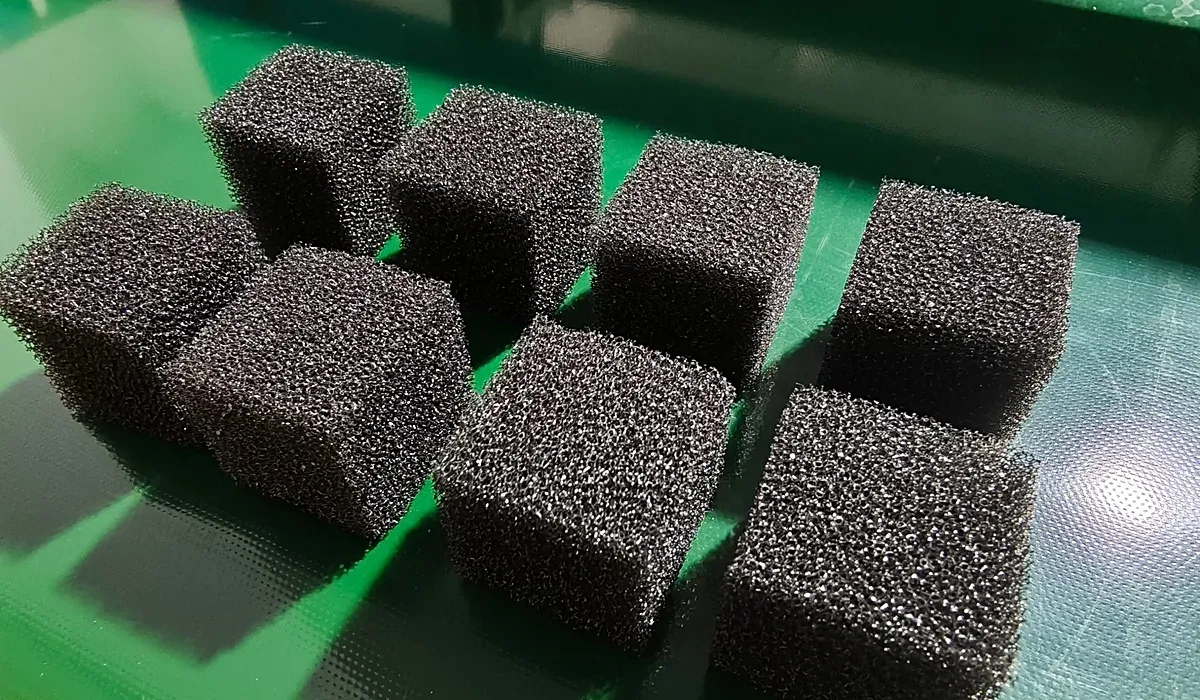
In a rotating drum, sponge media is usually finished when it has lost size and structure — not when it stops growing biofilm. If the cubes come out measurably smaller than they went in, tear when you squeeze them, or the drum needs cleaning far more often than it used to just to hold its normal water level, the media is the problem, not the biology. In rotating-drum service, plan around roughly three years of media life, and judge replacement by inspection rather than by the calendar alone. This article covers how sponge wears in drum duty, how clogging behaves there, and the checks that tell you replacement is due.
Why drum duty is mechanical, not just biological
In a static bed, sponge media sits still. Water passes through it, biofilm grows on it, and the media ages slowly — wear comes mainly from time and from cleaning. A rotating drum is a different life entirely. The media tumbles continuously: cubes rub against each other and against the drum internals, are compressed under the weight of the bed on every rotation, then lifted and dropped again. Every rotation is a small abrasion cycle, and a working drum runs thousands of rotations a week.
Two things accelerate that wear. Grit carried in with the inflow acts as an abrasive inside the bed, grinding at the cube surfaces as everything moves. And cleaning — backwashing or air scouring a drum installation, as covered in our rotary drum filter sizing and backwash guide — adds its own stress. In a drum, service life is set at least as much by the foam's mechanical durability — density and cell structure — as by anything biological.
How sponge media wears in a drum
Shrinkage. The most common end-of-life pattern is cubes losing volume. Repeated compression fatigues the cell walls, the foam stops springing back fully, and each cube slowly gets smaller. Shrinkage matters twice over: the bed holds less media volume than the drum was filled with, and the surface available for biofilm shrinks with it. One caution on measurement: new sponge is vacuum-packed and expands after unpacking — NovusPore expands about 1.7× — so take your baseline cube size after expansion and bedding-in, not straight out of the pack. Note also that shrinkage within the first months of service is not normal wear at all; it is the known failure pattern of underspecified, low-density sponge, and it points to a media specification problem rather than a drum problem.
Tearing and rounding. Fresh cubes have square corners and clean edges. Worn cubes round off, then start to tear along weakened cells. A cube that tears or crumbles in a hand-squeeze test has lost the structure that made it useful, whatever its surface measurements say.
Pore collapse. Inside the cube, the open pore structure flattens under the same fatigue. Collapsed pores hold less biofilm, drain worse, and trap solids where neither tumbling nor cleaning can reach them — which is where drum clogging starts, below.
Fines. Abraded fragments have to go somewhere. Torn-off corners and foam crumbs leave with the effluent or collect in downstream screens and sumps. Finding sponge fines downstream is one of the clearest signs that abrasion is actively consuming the bed.
Clogging in a drum is not clogging in a static bed
In a static bed, clogging is straightforward: solids and biofilm build up in the pores until headloss rises, and a proper clean restores most of the performance. A drum partly cleans itself — the tumbling sheds excess biofilm and keeps surfaces from matting — so healthy drum media clogs slowly.
Worn drum media clogs differently, and worse. Solids lodge inside collapsed pores where tumbling cannot dislodge them. Torn, flattened cubes pack against each other instead of rolling freely, and as cubes shrink unevenly the bed distribution goes uneven too — opening bypass paths while other zones choke. The practical test is what happens after cleaning: if a thorough clean restores flow and level behaviour for months, the clogging was surface fouling and the media is fine. If the improvement now lasts days or weeks where it used to last a season, the clogging is structural. No cleaning regime fixes collapsed foam.
The signs the media is at end of life
| Sign | How to check | What it tells you |
|---|---|---|
| Cubes measurably smaller | Measure a rinsed sample against the as-installed baseline size | Shrinkage wear — bed volume and surface are being lost |
| Cubes tear or crumble | Hand-squeeze test on a rinsed sample | Cell structure is fatigued; mechanical life is over |
| Buoyancy and handling change | Note whether cubes waterlog, sit lower or pack tighter than when new | Pore structure no longer drains and recovers as designed |
| Cleaning stops lasting | Compare the interval between cleans with the media's first year | Clogging has become structural — pore collapse, not fouling |
| Rising level or bypass at normal flow | Watch drum water level and bypass frequency at the usual load | Bed resistance is up, or shrunken media has broken the bed distribution |
| Sponge fines downstream | Check screens and sumps for foam fragments | Abrasion is consuming the media itself |
| Effluent quality drifts with no load change | Trend effluent quality against load records | A late sign — inspect the media before blaming the process settings |
No single sign has to be dramatic. In practice, two or three arriving together — smaller cubes, shorter cleaning intervals, fines in the sump — is the replacement signal.
What to check, and how often
Monthly, a visual pass is enough: bed distribution inside the drum, any bypass events, and a look in the downstream sump for fines. Quarterly, or at every planned deep clean, pull a sample — twenty or so cubes from different positions in the drum — rinse them, measure the average size against your baseline, and squeeze-test a few for tearing. Write the numbers down. A simple log of average cube size and cleaning interval, kept over a year, predicts replacement better than any catalogue figure.
One thing not to judge by: colour. The colour of sponge media comes from a colour masterbatch in the foam, nothing more. Faded or uneven colour on its own says nothing about wear; judge size, tearing and pore structure instead.
Drum duty vs static-bed duty: what life to plan around
The same sponge lives two different lives depending on where it works. In static-bed duty, our guidance is that replenishment starts after five years of service — the media ages slowly, and topping up the losses is a normal maintenance pattern. In rotating-drum service, plan around roughly three years: in real drum applications that is the working expectation, because the mechanical wear described above runs continuously.
Treat both figures as planning numbers, not guarantees. Actual life depends on solids load, grit content, drum speed and cleaning intensity. A gentle drum on well-screened inflow can run past the figure; a fast drum on gritty inflow can fall short. The inspection signs in the table — not the calendar — make the final call.
Before you order replacement media
Match the specification to the duty. In a drum, density and cell structure decide whether the media survives the tumbling; a headline surface-area figure says nothing about that. Our NovusPore sponge media is specified at a specific surface area above 5,000 m²/m³ with porosity above 98%, and biofilm forms on it in 3–7 days, so a change-out returns to service quickly. It ships vacuum-packed at 500 m³ per 40HQ and expands about 1.7× after unpacking — order by the expanded in-drum volume you need, not the packed volume. HNS manufactures its sponge and MBBR media in its own factory, and the sponge is built for mechanical duty as well as biological area.
If the drum inspection has you reconsidering media type altogether, two comparisons help: our guide to sponge-core balls versus all-plastic bio balls for small systems and drum-type duties, and HPU sponge versus HDPE MBBR carriers on where each media belongs. And if the wear pattern suggests the drum itself is undersized or over-speeded for its load, the rotary drum filter product page sets out the duty range the equipment is built around.
FAQs
How long does sponge media last in a rotating drum?
Plan around roughly three years in rotating-drum service. That is a duty-dependent planning figure, not a guaranteed life: solids load, grit, drum speed and cleaning all move it. The same media in a static bed lasts longer — there, replenishment normally starts after five years.
My sponge cubes shrank within a few months. Is that normal wear?
No. Shrinkage that fast is the known failure pattern of underspecified, low-density sponge, not normal drum wear. Check the density and specification of what was installed before blaming the drum — correctly specified media wears over years, not months.
Does a change in the media's colour mean it is worn out?
No. Sponge colour comes only from a colour masterbatch, and fading alone is not a wear criterion. Judge the media by cube size, whether it tears under a squeeze, and whether cleaning still restores performance.
Can I top up worn drum media instead of replacing all of it?
Topping up works in static beds, where replenishment is the normal pattern. In a drum, mixing new full-size cubes with shrunken, worn ones gives an uneven bed that tumbles and distributes badly. If the wear signs are general across the bed, a full change-out is the cleaner fix.
Get a media quantity and sample check: send us your drum dimensions, the media volume and cube size you run now, how long the current media has been in service, and a photo of a squeezed sample cube, and we will check the replacement quantity and a sample for you — contact us.