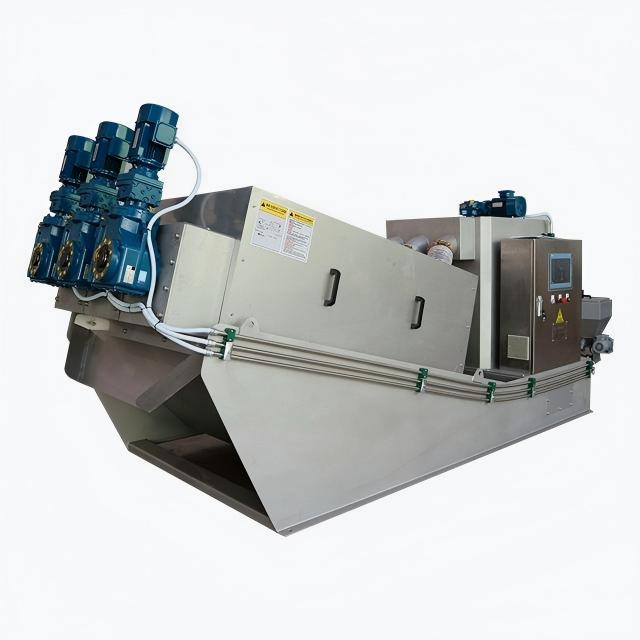
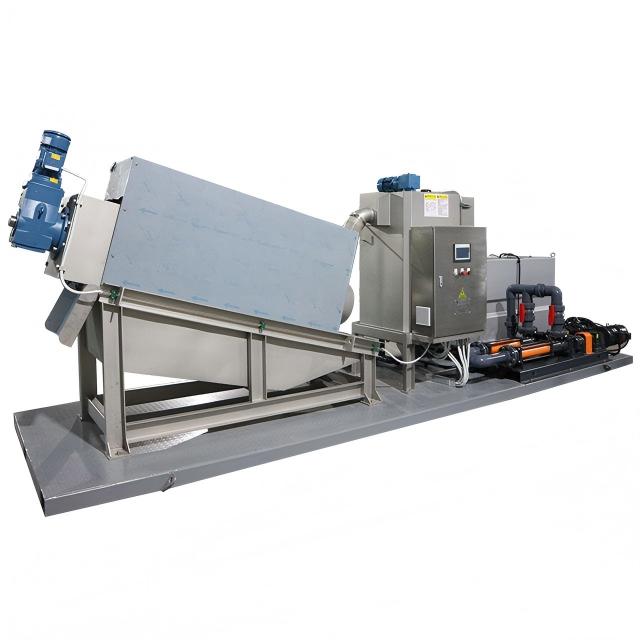
Volute Dewatering Screw Press
Volute Screw Press for Sludge Dewatering
Continuous sludge thickening and dewatering equipment using a slow-speed screw and self-cleaning moving-ring structure. Model selection is based on dry-solids load, sludge type, feed concentration, operating hours, and required cake condition.
VOLUTE SCREW PRESS FOR SLUDGE DEWATERING
PRODUCT OVERVIEW
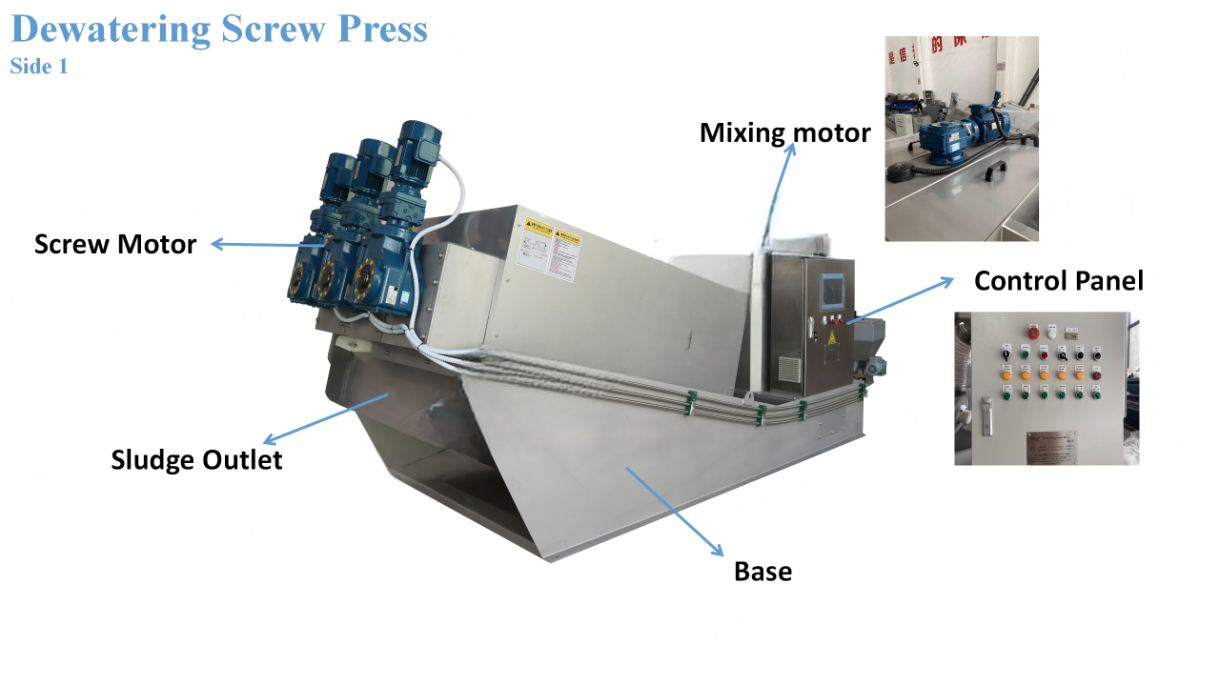
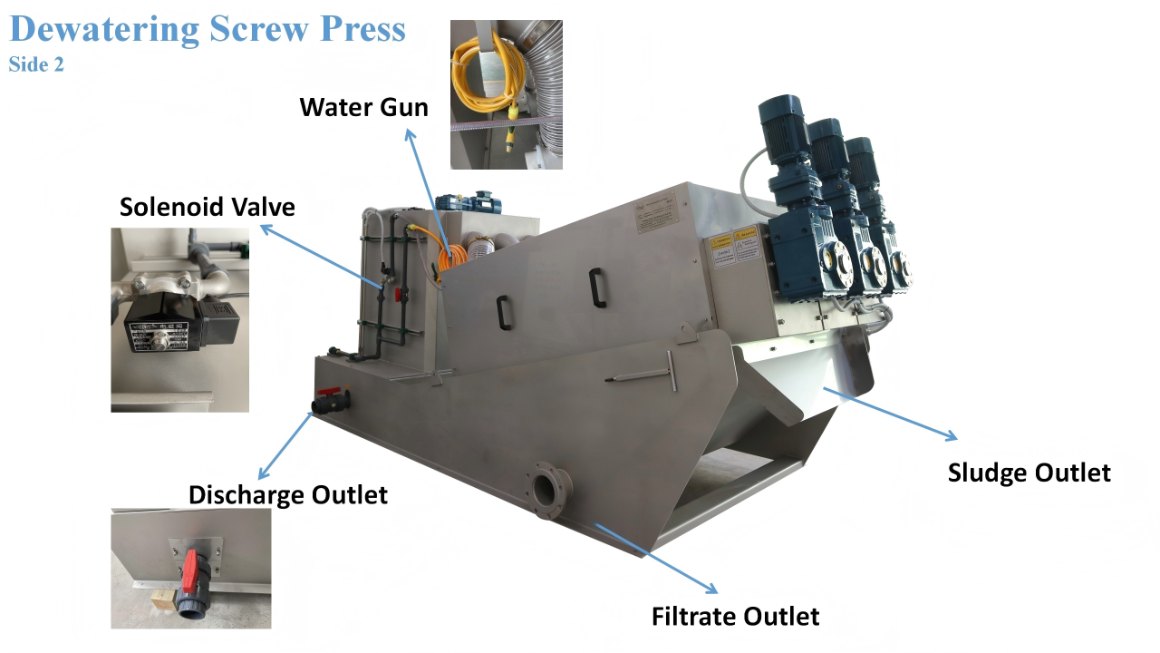
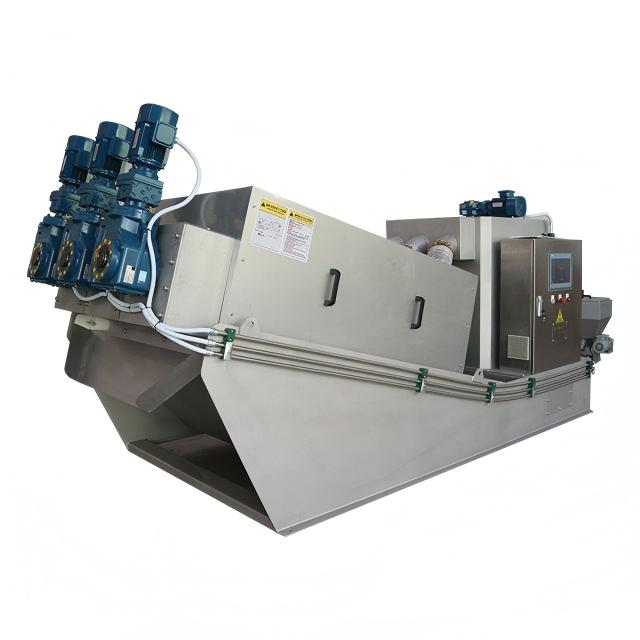
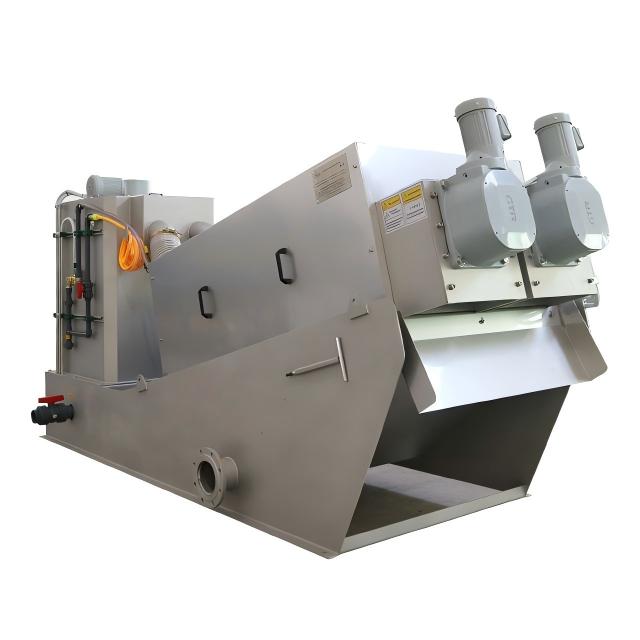
HydroNovus volute screw presses thicken and dewater sludge continuously through a slowly rotating screw shaft and a stack of fixed and moving rings. The self-cleaning movement between rings helps reduce screen clogging and allows the equipment to handle many low-concentration sludge streams with limited wash-water demand.
CORE FEATURES
• Integrated thickening and dewatering in one compact machine.
• Moving-ring structure provides continuous screen cleaning.
• Low-speed operation supports low noise and moderate power demand.
• Enclosed dewatering section helps keep the working area cleaner.
• Automatic operation can be integrated with polymer dosing and sludge-feed control.
• Modular equipment range for municipal and industrial sludge applications.
TECHNICAL PARAMETERS
Dry-solids capacity: model and sludge dependent
Feed sludge concentration: confirm with actual sludge data
Sludge type: biological, chemical, or mixed sludge after suitability review
Main components: screw shaft, fixed and moving rings, drive, flocculation tank, spray system, and controls
Wetted-part material: normally stainless steel; grade confirmed by project
Polymer system: selected according to sludge and flocculation testing
Operation: continuous automatic dewatering
Cake solids and capture rate: dependent on sludge properties, polymer program, and operating settings
APPLICATION SCENARIOS
• Municipal sewage-treatment sludge
• Food and beverage wastewater sludge
• Livestock and agricultural wastewater
• Paper, textile, and chemical wastewater sludge
• Small and medium packaged treatment plants
• Sludge thickening before further handling or disposal
SELECTION INFORMATION
Please provide wet-sludge flow, feed solids concentration, sludge source, current conditioning method, required operating hours, target cake solids, filtrate requirement, site voltage, and available footprint. A sludge sample or dewatering test is recommended for final model and polymer selection.
FREQUENTLY ASKED QUESTIONS
Q: Can the screw press treat very dilute sludge?
A: Many models include a thickening section and can accept relatively dilute sludge, but the practical range depends on sludge settleability, floc formation, and required throughput.
Q: Is polymer required?
A: Most applications require polymer conditioning to form stable floc. Polymer type and dosage should be verified through testing.
Q: Will the machine never clog?
A: The moving-ring structure reduces clogging risk and supports self-cleaning, but correct polymer preparation, spray-water quality, operating settings, and routine maintenance are still necessary.
Q: How do I compare models?
A: Compare dry-solids capacity rather than wet-sludge flow alone. Feed concentration, sludge type, operating hours, and expected cake solids all affect selection.
REQUEST ENGINEERING SUPPORT
Send your sludge flow, solids concentration, sludge source, operating hours, and target cake condition. HydroNovus will recommend a preliminary screw-press model, polymer system, and equipment scope.