Industry Solutions
DAF Making Too Much Sludge? Wet Float and Rising Sludge Volume, Diagnosed
A DAF making wet float and more sludge than expected usually has an air, chemistry or skimmer problem. Diagnose it step by step.
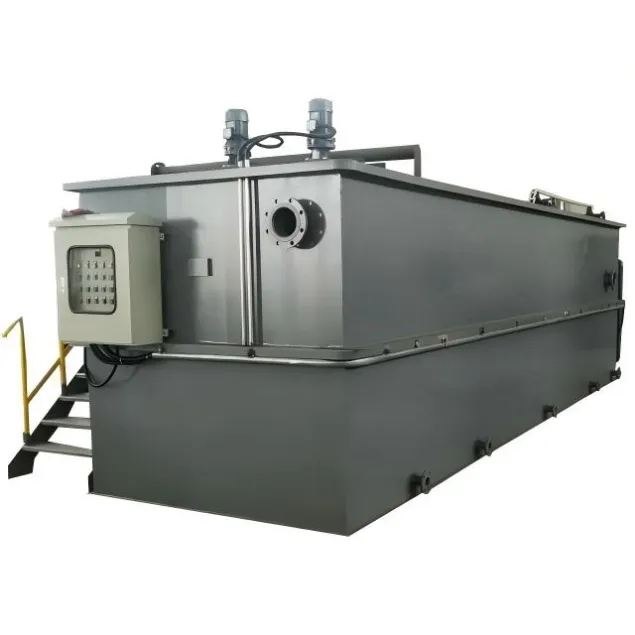
A dissolved air flotation unit that suddenly produces far more sludge than expected is usually not removing more pollutant than before. It is removing the same pollutant with far more water attached to it. Wet float — a thin, watery blanket that the skimmer pushes off in large volumes — is the most common form of this problem, and it is almost always an air, chemistry, or skimmer problem rather than a sign that the DAF is undersized.
The diagnostic question is therefore not "how do we dispose of all this sludge?" but "why is the float so wet?" Answer that, and the sludge volume usually falls back to a manageable level on its own.
First, confirm what "too much" actually means
Before changing anything, establish a baseline. A DAF's sludge output is driven by the solids load coming in, so a plant that has doubled its production or taken on a dirtier stream will legitimately produce more float. That is not a fault.
Work out the incoming solids load first: flow multiplied by suspended solids concentration gives the mass of solids entering the unit each day. If that load has risen in step with the sludge volume, the DAF is doing its job and the problem sits upstream — in production, in equalisation, or in a pretreatment step that has stopped catching solids it used to catch. If the load has not changed but the float volume has, the float itself has become wetter, the skimmer is removing more water with it, or both.
A quick field check is worth doing at this stage. Take a bucket of float from the hopper and let it stand: if a large share of free water separates within minutes, the float was carrying far more water than it should have. That points to the air and chemistry side of the unit, not to the disposal route.
Cause 1: Not enough air reaching the solids
A DAF lifts solids by attaching fine air bubbles to them. If the air supply is short, flocs stay heavy and the float that does form is thin and waterlogged. The usual suspects are a recycle rate that has drifted down, a saturator that is no longer reaching its working pressure, or a release system producing large bubbles instead of fine ones. Large bubbles are easy to spot: the water surface looks agitated and boiling rather than milky, and bubbles break the surface quickly instead of staying in suspension. Fine bubbles should make the water in the contact zone look cloudy-white.
The air-to-solids ratio is the check that ties this together — it compares the mass of air released against the mass of solids entering the unit. Our guide to the air-to-solids ratio in DAF explains how to calculate it and work through an example. If the ratio has fallen since the unit was running well, restore it before blaming anything else. Do not raise the recycle rate blindly, though: pushing more water through the unit raises the hydraulic load and can carry solids straight out with the effluent.
Cause 2: The chemistry is making weak floc
Most DAFs rely on coagulation and flocculation ahead of the floatation tank, and weak floc is the single most common cause of wet float. Floc that is too small, too fragile, or too watery will not trap air properly, will not hold together under the skimmer, and will drain poorly on the beach. The first thing to check is pH. Coagulants only work inside a fairly narrow pH window, and a stream whose pH has drifted — a new cleaning chemical, a changed production recipe, a spent neutralisation tank — can quietly take the coagulant out of its working range. Jar testing is the fastest way to confirm this, and our guide to coagulation and flocculation before DAF walks through the test sequence.
The second thing to check is dose. Both under-dosing and over-dosing produce wet float, for opposite reasons. Too little coagulant leaves solids unattached and free-floating, so the float is thin and the effluent carries solids. Too much coagulant — and too much polymer in particular — makes a slimy, water-holding floc that refuses to drain, and the extra chemical itself adds to the sludge mass. If the dose has been raised repeatedly to chase a cloudy effluent, step back and re-run the jar test rather than raising it again. The correct dose is the lowest one that produces a firm, drainable floc.
Cause 3: The skimmer is taking water with the float
Even a good float blanket becomes a sludge-volume problem if the skimmer removes it badly. A skimmer that runs too often, too fast, or too deep scoops up the water layer beneath the blanket along with the float. A skimmer that runs too rarely lets the blanket thicken, waterlog, and then slump back into the tank, so the same solids get floated twice. Watch a full skimmer pass: the blade should take the blanket cleanly and leave the water surface behind it largely undisturbed. If a visible bow wave of water runs ahead of the blade, or the hopper fills with mostly liquid, the blade is set too deep or is moving too fast.
The beach — the inclined surface the float drains across before it drops into the hopper — is part of the same check. A beach that is too short, too steep, or fouled with dried solids gives the float no time to drain, so water that should have returned to the tank leaves with the sludge. Clean the beach and check its slope against the supplier's drawing. Small as it sounds, this is one of the cheapest volume reductions available on an existing unit.
Cause 4: The sludge line downstream is adding volume back
Sometimes the DAF itself is fine and the volume problem is downstream. A float hopper that drains back poorly, a sludge pump that adds dilution water, or a thickening step that is bypassed will all inflate the volume that reaches disposal. Trace the float from the hopper to the dewatering step and ask at each point whether water is being added or whether water that should drain is being carried forward. Our guide to the DAF sludge line — thickening, storage and dewatering maps the full route and the points where volume is normally taken back out. If the dewatering step itself is struggling — wet cake, dirty filtrate — the cause may be the same weak floc that made the float wet in the first place, and fixing the DAF will fix both ends at once.
A diagnostic sequence that works in order
Use this order, one step at a time, and let the float tell you whether the change worked. Changing air, chemistry, and skimmer settings all at once makes it impossible to know which one fixed the problem.
Step | Check | What it tells you | If it is wrong |
|---|---|---|---|
1 | Incoming solids load (flow × TSS) | Whether more sludge is legitimate | Look upstream at production and pretreatment |
2 | Float appearance and bucket drain test | Whether the float is wet or the volume is real | Wet float: continue to steps 3–5 |
3 | Air supply: saturator pressure, recycle rate, bubble size | Whether enough fine air is reaching the solids | Restore air supply; check the air-to-solids ratio |
4 | Chemistry: pH, coagulant and polymer dose, jar test | Whether the floc is firm and drainable | Re-set pH and dose from the jar test, not from habit |
5 | Skimmer depth, speed, interval; beach condition | Whether the skimmer is taking water with the float | Adjust the blade and clean the beach |
6 | Sludge line: hopper drainage, dilution water, thickening | Whether volume is added downstream | Fix drainage and thickening before upsizing disposal |
When rising sludge volume really does mean a bigger problem
Not every case is a settings fault. A few patterns point to something structural. If the incoming load has genuinely grown and the unit is running at its design limit, the DAF may need a capacity review rather than a tuning exercise — our DAF system sizing data guide lists the data a proper review starts from. If the float is wet and the effluent is cloudy at the same time, the unit may be hydraulically overloaded; that is a different fault from wet float alone, and our guide to DAF troubleshooting for cloudy effluent covers it separately.
FAQ
Why is my DAF producing so much sludge all of a sudden?
The most common reason is not more pollutant but wetter float: the same solids mass is leaving the unit with far more water attached. Check the incoming solids load first, then the air supply, the coagulant dose and pH, and the skimmer setting — in that order.
What does wet float look like?
A wet float blanket is thin, soupy, and broken rather than a coherent layer, and it drains a large share of free water within minutes in a bucket test.
Can too much polymer cause more sludge?
Yes. Over-dosing polymer makes a slimy, water-holding floc that drains poorly, and the excess chemical itself adds mass to the sludge. The correct dose is the lowest one that produces a firm, drainable floc in a jar test.
Should I run the skimmer more often to reduce sludge volume?
Not necessarily. Running the skimmer too often or too deep scoops up the water layer under the blanket and increases the volume leaving the unit. The blade should take the blanket cleanly and leave the water surface behind it largely undisturbed.
Still getting more sludge than the design allows for?
Send us your flow, influent solids, current float appearance, and the DAF model you are running via our contact page. We will run a free first-pass check on the air-to-solids balance and the likely cause, and flag what needs a closer look on site. The DAF systems we supply come from makers we work with directly, and sizing support for a specific project is arranged case by case.