How to Measure Final Clarifier Sludge Blanket Solids — and Trust the Number
One grab sample does not describe a sludge blanket. Measure a depth profile with a core sampler, fix the depth and timing, and check it against lab solids.
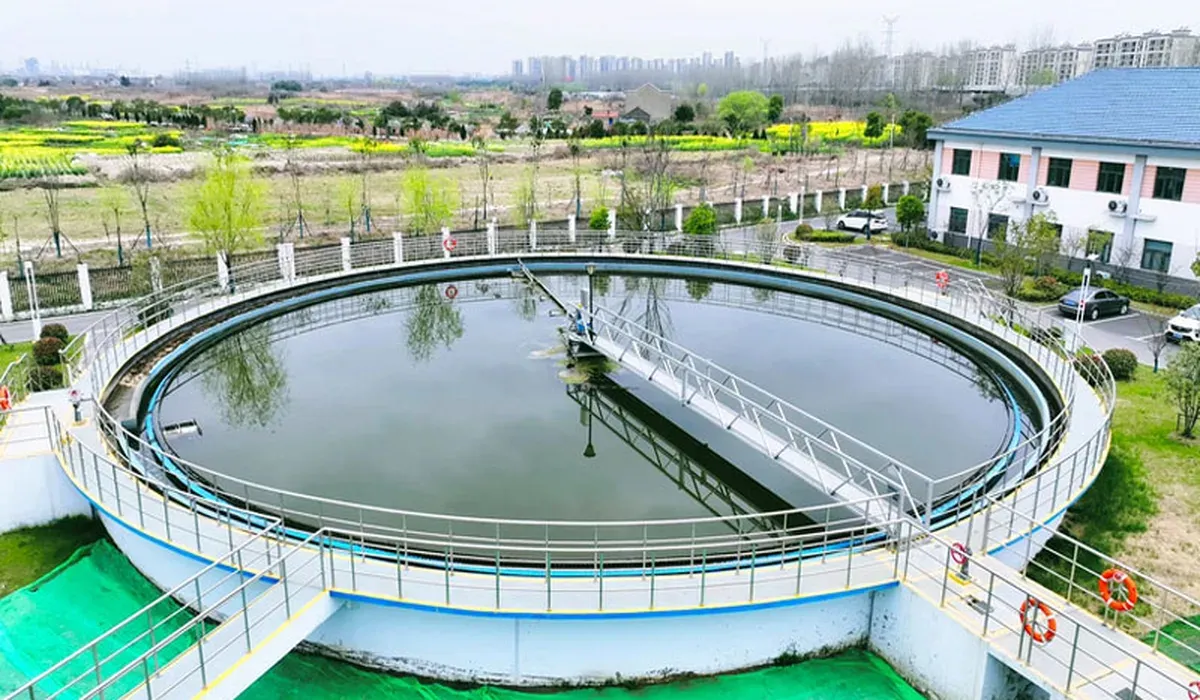
A single grab sample from a final clarifier does not describe the sludge blanket, and that is the root of most arguments about blanket solids numbers. The blanket is not uniform: denser at the bottom, thinner near the surface, and changing through the day with flow and return sludge rate. A reliable number comes from measuring a depth profile with a core sampler, always at the same place and time, and checking the field result against a laboratory solids test.
Why the number matters
The blanket solids concentration connects the clarifier to the rest of the plant. It tells you how much solids inventory is sitting in the clarifier, whether the return activated sludge (RAS) rate is keeping up with the solids arriving, and whether the sludge you send to dewatering is as thick as you think it is.
When the number is wrong, the decisions built on it are wrong too. A blanket that looks thicker than it is leads to over-wasting; one that looks thinner than it is leads to under-wasting, a rising blanket, and eventually solids washing over the weir.
What a blanket actually is
A sludge blanket is a layer of settled solids above the clarifier floor, with clarified water above it. It is not a solid block and it is not a well-mixed tank:
- It is stratified. The bottom of the blanket, near the floor and the sludge draw-off, is the densest. Concentration falls towards the top of the blanket, where the solids are looser and closer to the clarified water above.
- Its depth changes through the day. Higher flow pushes more solids in and raises the blanket; a higher RAS rate pulls it down.
- Its concentration changes with the sludge itself. A healthy, well-settling sludge compacts into a dense blanket. A bulking or poorly settling sludge forms a deep, fluffy blanket at a low concentration — and the depth alone will mislead you if you do not measure the concentration as well.
Method 1: the core sampler — the reference method
A core sampler, sometimes called a sludge judge, is a long transparent tube lowered vertically through the blanket to the floor. It captures a column of the blanket from top to bottom, and the depth of the solids in the tube shows the blanket depth directly.
How to use it. Lower it slowly and vertically at a fixed sampling point — the same point every time, usually about halfway between the centre and the wall on a circular clarifier, away from the inlet and the draw-off. Let it settle, close the valve, and lift it out without tipping it. Read the blanket depth from the tube, then drain the contents into a sample bottle, mixing gently so the sample represents the whole column.
Why it is the reference. It is the only simple field method that measures the whole blanket rather than one depth.
Its limits. It is a point measurement — one column in one place. In a large clarifier, take two or three cores at different points and average them. Always sample at the same time of day, and note the flow and RAS rate.
Method 2: a fixed-depth grab sample — useful only if the depth is fixed
The method debated in the operator post — a 1,000 ml sample taken from the blanket — can work, but only if the depth is fixed and recorded every time.
A grab sample taken at an unknown depth measures an unknown part of a stratified blanket: low near the surface, high near the floor. If you use this method, fix the depth — for example, always sample from the mid-depth of the blanket, measured with the core sampler first — and write the depth on the sample record. A grab sample without a recorded depth is not a measurement; it is a guess with a bottle. The 1,000 ml volume is a sensible choice — large enough to average out small-scale variation and small enough to handle. The volume is not the problem. The depth is.
Method 3: a TSS probe — fast, but only as good as its calibration
A suspended-solids probe lowered into the blanket gives a reading in seconds — it can show the blanket rising in real time, which no laboratory method can do.
But a probe does not measure solids directly. It measures light scattering or absorption, and converts that to a solids number using a calibration specific to your sludge: a probe calibrated on one plant's sludge will read wrong on another's, and it will drift as the sludge character changes. A probe is a trend instrument until it is calibrated against laboratory results.
How to keep it honest. Once a month, or whenever the sludge character changes, take a core sample at the same depth as the probe, run the laboratory test below, and compare. If the probe reads consistently high or low, adjust the calibration. If it disagrees with the lab result on a single day, trust the lab result.
Which method should you use?
| Method | Measures | Best for | Limit |
|---|---|---|---|
| Core sampler | Whole blanket | Reference measurement | One point only |
| Grab sample | One depth | Quick checks | Needs a fixed, recorded depth |
| TSS probe | Trend | Live monitoring | Needs lab calibration |
| Lab TSS test | True value | Reports | Slow |
The laboratory check: total suspended solids
The laboratory test is the anchor for every other method: the total suspended solids (TSS) test — filter, dry, and weigh a known volume.
TSS (mg/L) = dry residue (mg) ÷ sample volume (L)
A worked example: filter 100 ml of blanket sample, dry the residue, and weigh it at 0.42 g — 420 mg of dry solids in 0.10 L, which gives 4,200 mg/L. A RAS sample might give 8,000–12,000 mg/L, a typical range for return sludge — treat that as a rough guide, not a design value.
For blanket samples, the laboratory result is the number to quote in reports and to calibrate the probe against. For day-to-day operation, the core sampler plus a quick field check is usually enough.
Turning the number into a decision
A blanket solids number on its own is just a number. It becomes useful with the blanket depth and the flows:
- Solids inventory in the clarifier. Blanket depth × clarifier area × blanket concentration gives a rough inventory of the solids held there. If that inventory is growing week by week, the plant is accumulating solids somewhere — check the wasting rate.
- RAS rate check. If the blanket is rising and the blanket solids are high, the RAS rate is too low for the load — or the load has risen and the RAS rate has not followed it.
- Dewatering feed. The sludge sent to dewatering is drawn from the blanket or the RAS line, so its concentration is the blanket concentration, not the MLSS. Use the blanket number when you size or troubleshoot a dewatering step. Our screw press sizing guide works from the dry-solids load, and the sludge storage tank sizing guide shows how the storage volume depends on the same feed concentration.
A single reading is rarely enough to act on. Measure at the same time and place for a week, record the flow and RAS rate alongside it, and look at the trend. A trend that is rising, falling, or suddenly changing is worth acting on; a single high or low reading is usually worth re-measuring first.
Common mistakes
- Sampling at a different depth each time. The most common error. Fix the depth and record it.
- Sampling at a different time of day. Flow and RAS rate change through the day, and so does the blanket. Same time, same place, every time.
- Trusting a probe that has never been calibrated on your sludge. A probe reading is a conversion, not a measurement.
- Quoting the blanket depth as if it were the solids concentration. A deep blanket can be dilute and a shallow blanket can be dense.
- Ignoring the settling behaviour. If the blanket is deep and the concentration is low, the sludge is not compacting — that is a settling problem, not a measurement problem. Our lamella clarifier sizing guide and the tube settler retrofit design guide cover the settling side; if the clarifier itself is the bottleneck, the tube settler product page gives the HNS data, with specific surface areas of 109, 87 and 50 m²/m³ for the HNS-TS35, HNS-TS50 and HNS-TS80 models and a 5–10 year service life.
Frequently asked questions
Is a 1,000 ml grab sample enough to measure blanket solids?
The volume is fine; the depth is what matters. A 1,000 ml sample at a fixed, recorded depth is a valid measurement; the same volume at a random depth is not.
How often should I measure blanket solids?
Daily, at the same time and place. A weekly laboratory check is enough to anchor the field method and the probe calibration.
Can I use a TSS meter instead of the laboratory test?
For day-to-day trends, yes — once it is calibrated against laboratory results on your own sludge. For a number you will quote or size equipment on, use the laboratory test.
The short version
Measure the whole blanket, not one depth. Use a core sampler at a fixed point and time, take a representative sample, and anchor the result with a laboratory solids test. Use a probe for trends only.
If you are sizing a clarifier upgrade, a tube settler retrofit, or a dewatering step and want a second opinion on your plant's solids figures, our team can run a free sizing and quantity check. Reach us through the contact page.