Industry Solutions
How to Size a Screw Press by Dry Solids Load — Not Just Sludge Flow
Learn how sludge flow, feed solids concentration, dry-solids load, operating hours and sludge type affect screw press sizing—and why m³/h alone is not enough.
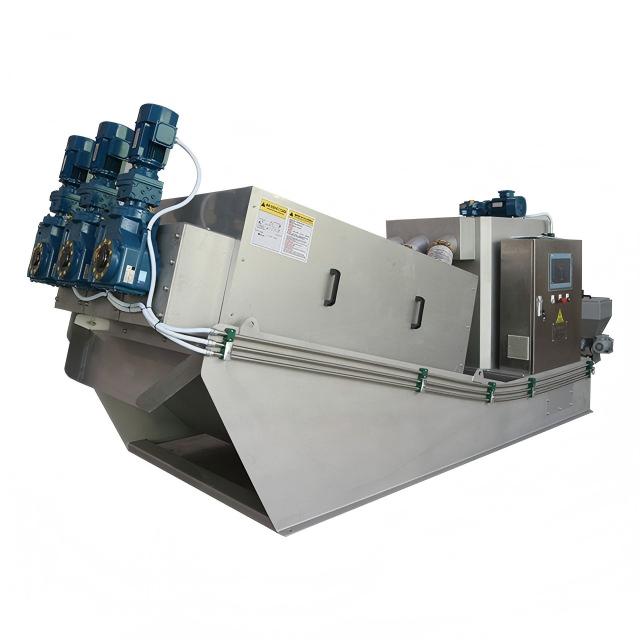
A screw press should not be selected from sludge flow alone.
Two wastewater plants may both feed 5 m³/h of sludge, yet place very different loads on the dewatering equipment if one sludge contains 0.5% solids and the other contains 2.0% solids.
For preliminary screw press sizing, the key question is therefore not only:
“How many cubic meters of sludge per hour?”
It is also:
“How many kilograms of dry solids must the press handle per hour?”
Quick Answer
Screw press sizing should consider both hydraulic flow and dry-solids load.
Start with wet sludge flow, feed solids concentration, sludge source, actual operating hours, polymer condition and target cake requirement. Then convert the sludge flow into kg DS/h before comparing equipment models.
A flow-only specification can be misleading because the same m³/h can represent very different quantities of actual solids.
The 7 Data Groups to Check Before Screw Press Selection
Project Data | What to Provide | Why It Matters |
|---|---|---|
Wet Sludge Flow | m³/day or m³/h | Defines the hydraulic feed to the press |
Feed Solids | % TS / % DS or equivalent concentration | Determines how much actual solid material enters |
Dry Solids Load | kg DS/h or kg DS/day | Provides the mass-loading basis for model selection |
Sludge Type | WAS, primary, DAF, chemical, mixed or industrial sludge | Different sludges dewater differently |
Operating Hours | Hours per day and days per week | Converts daily sludge generation into required hourly capacity |
Polymer Condition | Current polymer, dosage or test information | Conditioning strongly affects dewatering behavior |
Target Cake / Disposal | Required cake condition and disposal route | Helps define whether a screw press is the right technology |
1. Start With Sludge Flow — Then Convert It Into Dry Solids
Wet sludge flow is usually the first number available from a plant.
For example:
- 20 m³/day of sludge
- 5 m³/h feed rate
- 100 m³/day from a sludge holding tank
These numbers are useful, but they describe the total sludge volume including water.
A screw press must handle the solids contained inside that volume.
For preliminary calculations, dry-solids load can be estimated from sludge flow and feed solids concentration.
Dry Solids Load (kg DS/h) ≈ Sludge Flow (m³/h) × Feed Solids (%) × 10
This simplified relationship assumes the sludge density is close to water and is suitable for preliminary engineering estimates.
For final equipment selection, use measured sludge concentration and the actual project data.
2. Why the Same Flow Can Require Different Screw Press Capacity
Consider two plants feeding the same sludge volume.
Condition | Plant A | Plant B |
|---|---|---|
Sludge Flow | 5 m³/h | 5 m³/h |
Feed Solids | 0.5% | 2.0% |
Approx. Dry Solids Load | 25 kg DS/h | 100 kg DS/h |
The hydraulic flow is identical.
The dry-solids load is four times higher in Plant B.
That difference can directly affect:
- screw loading
- required dewatering area
- polymer consumption
- operating speed
- cake discharge condition
- model selection
This is why a quotation based only on “5 m³/h sludge capacity” is incomplete.
3. Daily Sludge Volume Must Be Matched to Actual Operating Hours
Another common mistake is dividing daily sludge generation by 24 hours when the screw press will not actually run for 24 hours.
Suppose a plant generates:
24 m³/day of sludge
If the screw press operates:
Operating Schedule | Required Average Feed |
|---|---|
24 h/day | 1.0 m³/h |
12 h/day | 2.0 m³/h |
8 h/day | 3.0 m³/h |
6 h/day | 4.0 m³/h |
The daily sludge volume has not changed, but the required hourly capacity changes substantially.
Before sizing the equipment, confirm:
Daily sludge generation → storage arrangement → available operating hours → required hourly feed
A sludge holding tank can provide operational flexibility, but its usable volume and the plant's operating schedule still need to be considered.
4. Sludge Type Matters as Much as the Numbers
Two sludges with the same flow and the same solids concentration may still behave differently during dewatering.
Typical sludge sources include:
- waste activated sludge
- primary sludge
- mixed municipal sludge
- DAF float sludge
- chemical precipitation sludge
- food-processing sludge
- pulp and paper sludge
- textile or industrial biological sludge
The particle structure, organic content, oil or grease, fibers, chemical precipitates and biological characteristics can all affect how easily water is released.
Therefore:
kg DS/h tells you how much solid material must be processed. Sludge characteristics tell you how difficult that material may be to dewater.
For unfamiliar industrial sludge, laboratory conditioning or dewatering trials are more reliable than assuming the behavior from sludge concentration alone.
5. Feed Solids Concentration Also Changes the Hydraulic Duty
Dry-solids load and hydraulic flow must be evaluated together.
Consider a project requiring treatment of approximately 100 kg DS/h.
Feed Solids | Approx. Wet Sludge Flow |
|---|---|
0.5% | 20 m³/h |
1.0% | 10 m³/h |
2.0% | 5 m³/h |
4.0% | 2.5 m³/h |
The dry-solids load is the same, but the hydraulic volume reaching the equipment changes considerably.
This matters because a screw press still has hydraulic limitations in addition to its dry-solids capacity.
A reliable preliminary selection should therefore check both:
Hydraulic Load (m³/h)
Dry Solids Load (kg DS/h)
Neither number should be used alone.
6. Thickening and Dewatering Are Not the Same Requirement
Before choosing a screw press, clarify what the project is trying to accomplish.
Some projects mainly need to increase sludge concentration before another treatment stage.
Others need to produce a dewatered cake for transportation, disposal or further treatment.
These are different process objectives.
Sludge Thickening
The main objective is volume reduction by increasing solids concentration while the sludge remains pumpable.
Sludge Dewatering
The objective is greater water removal and production of a cake-like solid suitable for handling.
A project with very dilute sludge may therefore require a different process arrangement from a project feeding already-thickened sludge directly to a dewatering machine.
Do not assume that every sludge problem should begin with a screw press model number.
First define whether the project requires:
Thickening → Dewatering → Both
7. Polymer Conditioning Is Part of the Dewatering Process
Screw press performance is closely connected to sludge conditioning.
Polymer helps suspended particles form flocs that can retain solids while allowing water to separate.
However, polymer type and dosage should not simply be copied from another wastewater plant.
Useful project information includes:
- existing polymer type
- powder or liquid polymer
- preparation concentration
- dosage if known
- dosing point
- flocculation tank condition
- previous jar-test or operating results
Poor conditioning can cause unstable cake, poor filtrate, excessive polymer consumption or reduced capacity even when the mechanical equipment itself is correctly sized.
For this reason, screw press selection should consider the complete sludge dewatering line rather than only the press.
8. What Else Affects Model Selection?
Once hydraulic flow and dry-solids load have been established, several other project conditions should be reviewed.
Selection Factor | Why It Matters |
|---|---|
Sludge source | Indicates expected dewatering behavior |
Feed concentration | Affects both hydraulic and solids load |
Peak condition | Prevents overload during sludge withdrawal periods |
Required operating hours | Determines hourly capacity |
Polymer response | Affects floc formation and separation |
Target cake condition | Influences process and equipment choice |
Filtrate requirement | Important where filtrate returns upstream |
Wash water | Required for cleaning and maintenance |
Installation space | Affects equipment arrangement |
Cake discharge method | May require conveyor, hopper or container |
Electrical standard | Required for controls and motors |
Automation level | Defines pumps, dosing and PLC integration |
Common Screw Press Sizing Mistakes
Mistake | Better Approach |
|---|---|
Selecting only by m³/h | Check both m³/h and kg DS/h |
Using daily sludge volume as hourly capacity | Confirm actual press operating hours |
Ignoring feed solids variation | Use normal and peak concentration ranges |
Treating all sludge as equivalent | Identify sludge source and treatment history |
Assuming polymer dosage | Use actual conditioning data or testing |
Specifying cake dryness without sludge data | Treat cake condition as a project target, not a guaranteed generic number |
Ignoring sludge storage | Review holding-tank volume and feed schedule |
Buying from catalogue capacity alone | Match hydraulic, solids and sludge characteristics |
What Should You Send Before Requesting a Screw Press Quotation?
For a useful preliminary screw press selection, provide the following information.
Sludge Production
- daily sludge volume
- average sludge flow
- peak sludge flow
- available operating hours
Sludge Characteristics
- sludge source
- feed solids concentration
- normal and peak concentration if available
- pH and temperature where relevant
- presence of oil, fibers, grit or unusual solids
Dry Solids
If known, provide:
- kg DS/day
- kg DS/h
If dry-solids load has not yet been calculated, provide sludge flow and feed solids concentration so it can be estimated.
Chemical Conditioning
- current polymer
- dosage if known
- preparation system
- any previous testing
Dewatering Target
- desired cake condition
- disposal or further-treatment route
- filtrate requirement
- required operating schedule
Site Conditions
- available footprint
- voltage and frequency
- wash-water availability
- cake discharge arrangement
- required automation level
If a value is unknown, mark it as Missing rather than inserting an assumed number.
Recommended Project Submission Format
Status | Example |
|---|---|
Confirmed | Sludge flow = 4 m³/h |
Confirmed | Feed solids = 1.5% |
Calculated | Dry solids load ≈ 60 kg DS/h |
Range | Feed solids = 1.2–1.8% |
Target | Reduce sludge volume before off-site disposal |
Missing | Polymer consumption not yet tested |
This makes the technical discussion clearer and helps separate confirmed operating data from assumptions.
Frequently Asked Questions
Can I size a screw press only from sludge flow?
No. Wet-sludge flow should be evaluated together with feed solids concentration and dry-solids load. Two projects with the same m³/h can have very different kg DS/h.
What does kg DS/h mean?
kg DS/h means kilograms of dry solids per hour. It represents the mass of actual solid material entering the dewatering system rather than the total sludge volume including water.
How do I calculate dry-solids load if I only know sludge flow and solids percentage?
For a preliminary estimate, when sludge density is close to water:
kg DS/h ≈ m³/h × solids concentration (%) × 10
For final selection, use measured plant data where available.
Is higher feed solids concentration always better?
Not necessarily. Higher concentration reduces hydraulic volume for the same dry-solids load, but sludge rheology, pumping, mixing, flocculation and dewatering behavior must still be considered.
Can every sludge be treated with a screw press?
No. Suitability depends on sludge characteristics, conditioning response, solids content and the required cake condition. Some projects may be better suited to a belt filter press, chamber filter press or another dewatering process.
Should a screw press be selected before polymer testing?
A preliminary model can be discussed from sludge data, but unfamiliar sludge should be tested when final cake condition, polymer demand or dewatering performance is critical.
Related Equipment and Technical Resources
Planning a Sludge Dewatering Project?
Do not start with a catalogue model.
Send HydroNovus your sludge source, wet-sludge flow, feed solids concentration, operating hours and target cake condition.
We can first calculate the hydraulic and dry-solids duty, review the sludge characteristics and then discuss whether a screw press is the appropriate dewatering option.
Sludge data available? Send the analysis and operating schedule for a preliminary review.