Industry Solutions
How Long Does MBBR Media Last? Lifespan, Wear Signs and When to Top Up or Replace
HDPE MBBR media lasts 15+ years in normal duty. Learn the wear signs, when to top up vs replace, and get a free quantity check.
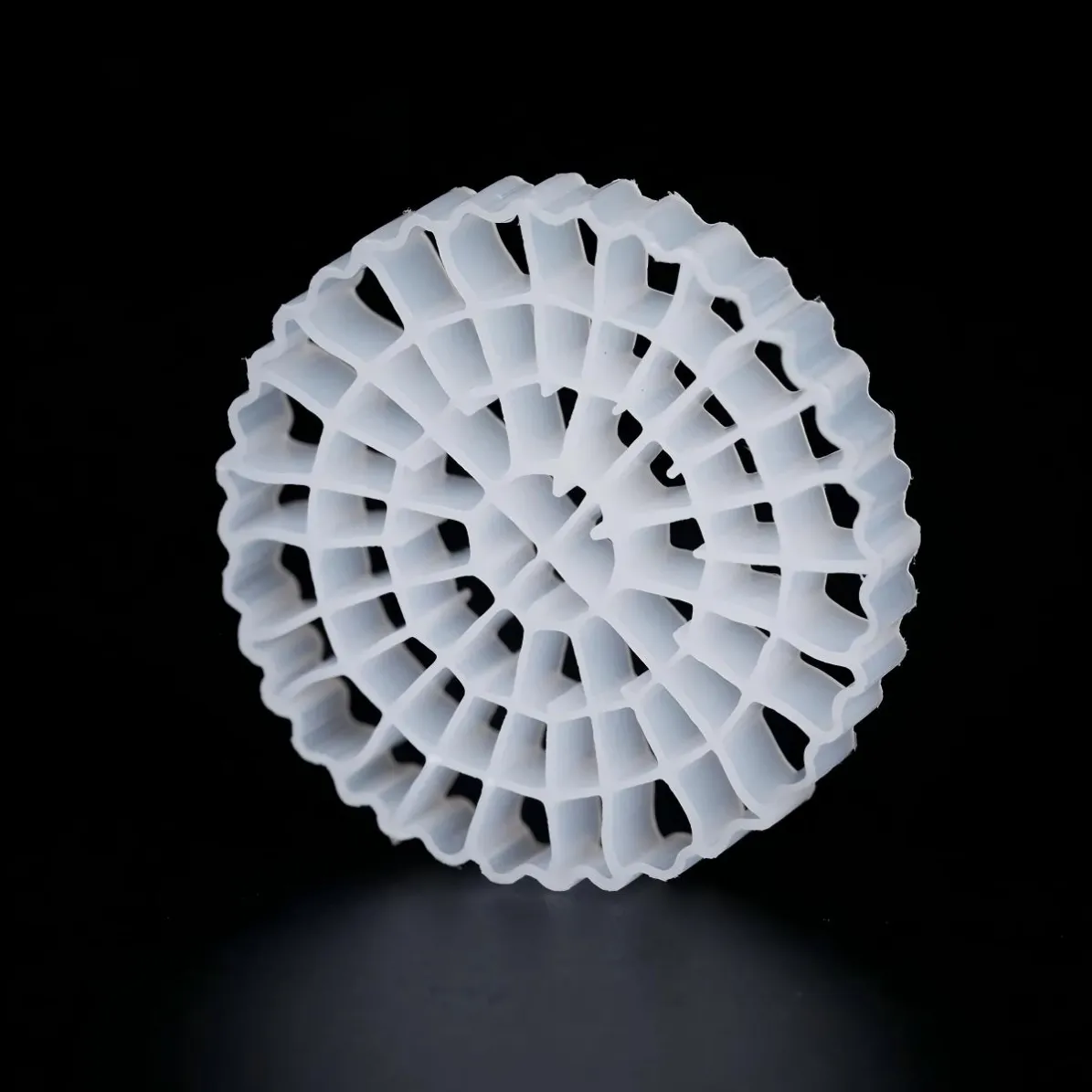
HDPE MBBR media has a service life of more than 15 years under normal duty. That figure applies to carriers moulded from 100% virgin HDPE and operated within their design range. In practice, media is rarely removed because it has reached a fixed age. It is topped up or replaced because wear, media loss, or a process change has reduced the effective surface area available in the tank.
That distinction matters. A carrier can still be present and look intact from the walkway, yet contribute far less protected surface than when new. Lifespan management is therefore not a calendar exercise. It is an inspection exercise.
What does the 15-year figure actually depend on?
Material. The starting point is the polymer itself. Quality carriers are moulded from 100% virgin HDPE, with a density of 0.96–0.98 g/cm³ — close to water, so the carriers circulate evenly with the mixed liquor. Media made with a high share of recycled or filled material typically becomes brittle sooner. If you do not know what an installed carrier was made from, treat its remaining life as an unknown and inspect it directly.
Duty. A carrier in a lightly loaded municipal reactor lives an easier life than one in a high-rate industrial or aquaculture system running continuously at high fill. Design dosing (filling) ratios run from 15% to 65% of reactor volume, and the higher the fill, the more carrier-to-carrier contact takes place. In continuously loaded systems such as RAS biofilters, wear accumulates faster because the media never rests — the duty pattern behind our RAS water treatment hub is exactly that kind of high-hour service.
Abrasion. HDPE does not usually fail suddenly. It wears. Years of carrier-to-carrier and carrier-to-wall contact slowly round off edges and polish the internal fins where the protected biofilm surface sits. Grit carried over from poor pretreatment speeds this up sharply.
Chemical exposure. The carrier sees whatever the process sees: cleaning-in-place chemicals returned to the biological stage, pH overshoots, and abnormal industrial discharges. HDPE tolerates normal wastewater chemistry well, but repeated exposure to aggressive cleaning chemicals shortens its life.
UV and storage before install. Media left outdoors in direct sun for a long period before installation can lose toughness before it ever enters the tank. Store spare media under cover, and check long-stored stock for brittleness before dosing it.
Signs of wear to inspect for
Take a sample from several points in the reactor, rinse it, and look for the following.
- Surface smoothing. Run a thumb over the internal protected surfaces. New media has a slightly textured finish that biofilm grips well. Worn media feels polished. Smooth internal surfaces hold a thinner, less stable biofilm, so treatment performance falls even though the carrier count has not changed.
- Cracking and broken fins. Split walls, snapped internal spokes, and cracked outer rings mean the piece no longer protects its full surface area, and the fragments it sheds can pass downstream. A few broken carriers in a sample are normal in an old bed. A large share is not.
- Deformation. Flattened, ovalised, or creased carriers indicate mechanical stress beyond normal circulation, and they pack and move unevenly.
- Density change and floating behaviour. Healthy carriers at 0.96–0.98 g/cm³ circulate through the whole depth. If a cleaned sample shows many carriers that persistently float flat or sink and stay on the bottom, the material or its structure has changed. Judge this on rinsed media: a thick biofilm changes buoyancy temporarily on its own.
- Loss of volume. Sometimes the media is fine and there is simply less of it: losses through a damaged retention screen, carryover during a hydraulic surge, or removal during tank cleaning, never made good. Check the fill level against the original dose before blaming wear.
Judge the bed against its original specification, not against a guess. The protected surface area differs a lot by model — for example, MBBR19 is rated above 650 m²/m³, MBBR37 above 800 m²/m³, and MBBR64 above 1,200 m²/m³ — so the cost of wear depends on the model you started with. Our guide to MBBR media selection by surface area explains how those ratings are used in design.
Top up or full replacement — how to decide
Work through two checks before you order anything.
Check 1: How much media is actually in the tank? Compare the current fill fraction with the original design dose. If the bed has lost volume but the remaining carriers are rough-surfaced, intact, and circulating normally, this is a top-up case. Restore the volume and the surface area comes back with it. Use the method in our MBBR media volume calculation guide to work out the quantity from your tank dimensions and target filling ratio.
Check 2: What condition is the remaining media in? Estimate the share of the sample that is cracked, deformed, or polished smooth. If that share is small, top up. If a large share of the bed is damaged, topping up alone does not solve the problem: the new carriers restore only their own surface, while the worn majority continues to underperform. In that case, plan a staged replacement — remove the worst of the old bed during a scheduled shutdown and replace it in steps, so the biofilm population is never wiped out at once.
Two practical rules follow from this. First, never replace a full bed in one step unless the reactor can be taken out of service and reseeded; membrane-forming time on HDPE media runs from 3 to 15 days, and a full change restarts that clock on the whole volume. Second, match the replacement model to the original design surface area, or recalculate if you change model. The current HDPE MBBR biofilter media range lists the protected surface area for each model so the comparison can be made directly.
How sponge media differs
Hydrophilic polyurethane sponge media wears by a different mechanism, so do not apply HDPE rules to it. The NovusPore PPC sponge media is a flexible, open-pore carrier with a surface area above 5,000 m²/m³ and porosity above 98%. Biofilm forms through the pore structure, not only on protected fins, and formation is fast — typically 3 to 7 days.
Sponge does not crack or polish the way rigid HDPE does. Its wear signs are loss of elasticity, permanent compression, torn pieces, and pores that no longer spring back after squeezing. In retrofit service, the normal pattern is not wholesale replacement: replenishment is typically only needed after about 5 years, topping up the share that has been lost or has lost its pore structure. That is one reason sponge is often used to add capacity to an existing tank — the top-up logic is built into how the media is run.
A simple inspection checklist
Use this at any planned tank entry or shutdown. It takes one sample bucket and a few minutes.
Check | What to look for | Action |
|---|---|---|
Fill level | Current media volume vs. original design dose (15–65% range) | If volume is down and media is sound, top up |
Carrier shape | Cracked rings, broken fins, flattened or oval pieces | If a large share is damaged, plan staged replacement |
Internal surface | Polished, smooth feel on protected surfaces | If widespread, effective area has fallen — plan replacement |
Floating behaviour | Rinsed sample persistently floating flat or sinking | Investigate material change; replace affected share |
Elasticity (sponge only) | Pores not springing back, tearing, permanent compression | Replenish the worn share |
Screens and losses | Damaged retention screen, media downstream of the tank | Repair the screen first, then restore volume |
What shortens media life in practice
Three operating habits account for most premature wear.
Grit carryover. Sand and fine grit that pass the pretreatment stage turn the reactor into a slow abrasive mill. If media is wearing faster than expected, look upstream before you look at the media itself.
Aggressive CIP chemicals. Concentrated cleaning chemicals discharged to the biological stage in a slug attack both biofilm and, over time, the carrier. Equalise or neutralise cleaning waste before it reaches the reactor, and keep it within the chemical range the media supplier confirms.
Running dry and aeration scouring. Air left running in a drained or partly drained tank knocks carriers together without the cushion of water. The same happens in service where uneven aeration makes one zone boil violently while another sits still. Keep air off in an empty tank, and treat very uneven circulation as a wear problem, not only a mixing problem.
FAQ
How long does MBBR media last?
HDPE carriers made from 100% virgin material have a service life of more than 15 years under normal duty. Actual life depends on abrasion, chemical exposure, and operation, so condition — not age — should drive the replacement decision.
When should I replace MBBR media?
Replace when inspection shows a large share of carriers cracked, deformed, or polished smooth, so that effective surface area has clearly fallen. If the media is sound but the volume has dropped, a top-up is the correct first step.
Can I mix new media with old media?
Yes, and for a working reactor it is usually the right approach. Staged top-up or partial replacement keeps an established biofilm in the tank while new carriers colonise, instead of restarting formation on the full volume at once.
Does sponge media last as long as HDPE media?
It follows a different pattern. Sponge media is managed by replenishment rather than full replacement, and in retrofit service replenishment is typically only needed after about 5 years. Its working surface also starts far higher — above 5,000 m²/m³ — so the two media are not compared on age alone.
Not sure whether you need a top-up or a replacement?
Send us your tank size, the media model you are running (if known), and a short description or photo of the media's current condition via our contact page. We will check the top-up or replacement quantity for you free of charge. The MBBR and sponge media come from our own factory in Yixing, and sizing support for a specific project is arranged case by case.