Floating Sludge in a Primary Clarifier: Is It Denitrification — and What to Do?
Sludge floating in a primary clarifier is usually denitrification in the blanket — gas lifting the sludge. Check blanket time, nitrate and temperature.
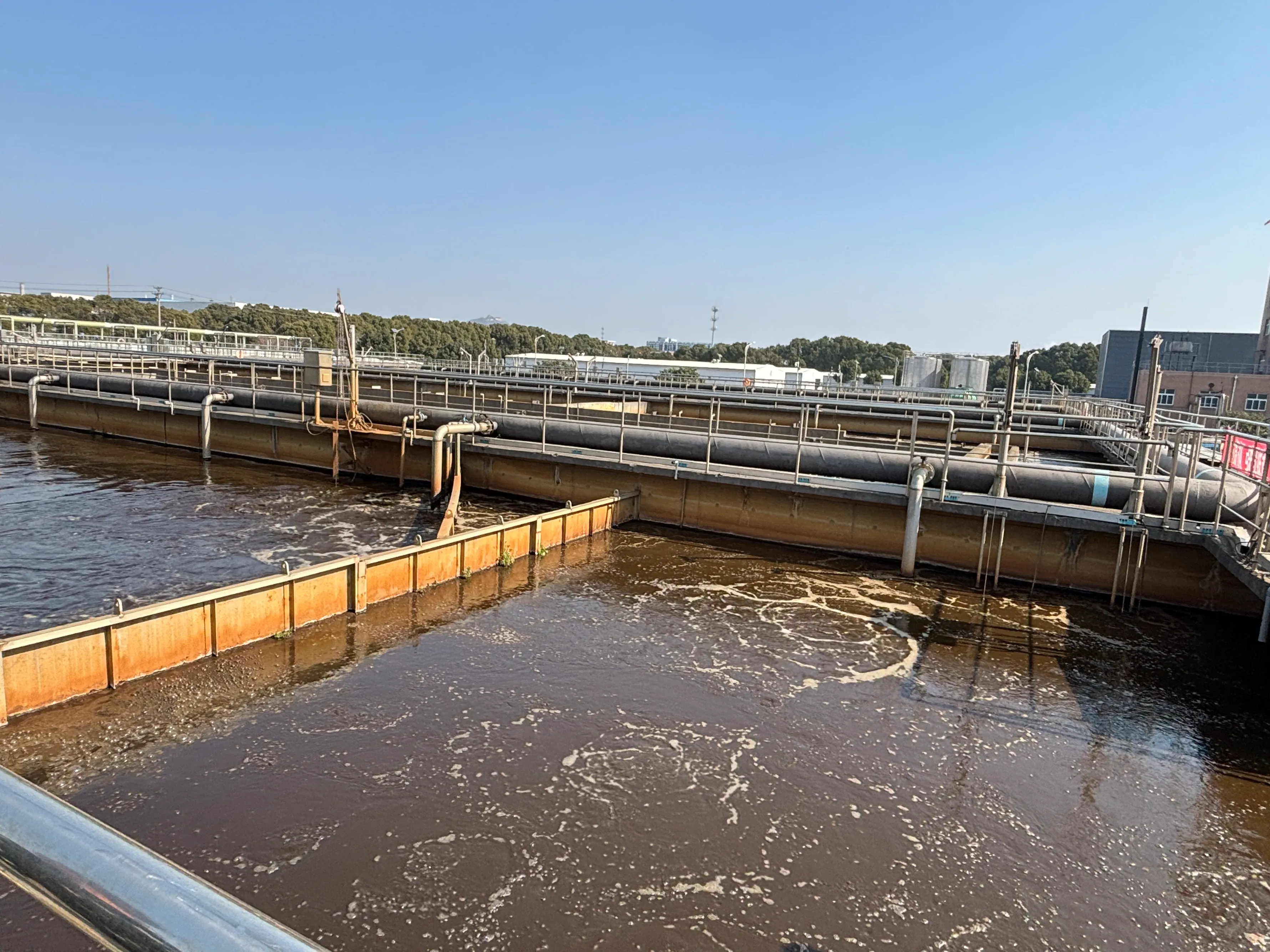
Sludge that should sink but instead rises and floats on a primary clarifier is an unsettling sight — and in most cases the cause is denitrification in the sludge blanket. Bacteria in the settled sludge use the nitrate in the water, convert it to nitrogen gas, and the gas bubbles lift the sludge to the surface. It is usually fixable, and it is worth confirming before you act — because grease, septic sludge, and hydraulic problems can look similar and need different fixes.
How denitrification lifts sludge
A primary clarifier settles out the heavy solids before the biological stage. The settled sludge collects in a blanket on the floor, and it is meant to be drawn off regularly. If it sits there too long, the biology in the blanket keeps working: the bacteria consume the remaining oxygen, then turn to nitrate as their oxygen source, releasing nitrogen gas.
The gas forms tiny bubbles that attach to the sludge flocs. A floc with enough bubbles attached becomes buoyant and rises, appearing as floating mats or clumps, sometimes with visible gas bubbles breaking at the surface. The process is fastest when the water is warm and nitrate is plentiful — so it is most common in summer, and in plants where the upstream process is nitrifying well.
Three conditions have to line up: nitrate in the water, sludge held in the blanket long enough for the bacteria to use it, and warm conditions. Remove any one of them and the floating stops.
How to confirm it is denitrification
Before changing anything, run these checks. They take less than an hour and they separate denitrification from the look-alike causes.
1. Look at the floating sludge. Denitrification sludge usually arrives as dark, clumpy mats with small gas bubbles visible at the surface, and it breaks apart easily when disturbed. Greasy scum is different: lighter in colour, oily to the touch, and a continuous film. Septic sludge is different again: black, strong-smelling, and usually sitting on a dark, stagnant blanket.
2. Check the blanket retention time. This is the key number — the time the sludge spends sitting in the blanket before it is drawn off:
Blanket retention time (hours) = blanket volume (m³) ÷ sludge withdrawal rate (m³/h)
As a rough guide, a blanket held for more than a few hours in warm conditions is long enough for denitrification to start — treat that as an indicator, not a limit.
3. Check the nitrate and the temperature. If the water entering the clarifier carries significant nitrate — from an upstream nitrifying stage, or from recycled flows — and the temperature is warm, denitrification is plausible. In cold weather, with little nitrate, it is unlikely. A simple nitrate test on the clarifier influent and a temperature reading are enough.
4. Check the pattern. Denitrification floating is usually worse in the afternoon and in warm weather, and better after a sludge draw-off. If the floating appears a few hours after the last draw-off and clears after the next one, the timing alone is strong evidence. If all four checks point the same way, you have your answer. If they do not, work through the other causes before changing the desludging schedule.
Other causes that look similar
| Cause | What the floating sludge looks like | Quick check | First fix |
|---|---|---|---|
| Denitrification | Dark, clumpy mats; gas bubbles at the surface | Blanket retention time, nitrate, temperature | Draw sludge off more often |
| Grease and oil | Pale, greasy, continuous film | Oily to the touch; worse after greasy discharge | Grease trap and skimmer |
| Septic sludge | Black, strong-smelling | Blanket left far too long | Draw off; check the sludge pump |
| Hydraulic short-circuit | Localised floating in one area | Inlet distribution and weir levels | Even out the flow |
Grease and oil. Fats, oils and grease float by nature, and a plant receiving an oily waste stream can show a floating layer that has nothing to do with gas. The scum is usually pale, greasy, and continuous rather than clumpy. The fix is at the source — a grease trap that is emptied on schedule — and a skimmer that is working. Our guide to industrial oil and grease pre-treatment covers the skimming and coagulation side.
Septic sludge. Sludge that has gone septic produces gas too, but from anaerobic decomposition rather than denitrification — it smells worse, looks blacker, and usually comes with a blanket left far too long. The fix is the same first step — draw the sludge off more often — but the underlying problem is a desludging routine that has broken down. If the sludge is septic, check the draw-off mechanism: a blocked or broken sludge pump is a common hidden cause.
Hydraulic short-circuiting. If the flow is not distributing evenly across the clarifier, some areas carry too much flow and the sludge there never settles properly. The symptom is usually localised — floating or carryover in one part of the clarifier while the rest looks normal. Check the inlet distribution and the weir levels. Our lamella clarifier sizing guide explains how the surface loading rate is calculated, and the hydraulic retention time formula gives the basic check:
HRT (hours) = clarifier volume (m³) ÷ flow rate (m³/h)
If the retention time has fallen well below the design value because the flow has grown, the clarifier is being asked to do more than it was built for, and no amount of desludging will fix that.
Fixing denitrification floating, in order
Step 1: draw the sludge off more often. This is the first and usually the sufficient fix. Shorten the interval between draw-offs so the blanket retention time falls, and draw for long enough to clear the blanket rather than just skimming the top. If the draw-off is manual, put it on a fixed schedule and log it. If it is automatic, check that the timer is actually running.
Step 2: reduce the blanket depth. A shallower blanket holds less sludge and turns over faster, leaving less time for denitrification. Do not draw the blanket down to nothing, but a thin, moving blanket is far less likely to float than a deep, stagnant one.
Step 3: look upstream at the nitrate. If the nitrate load is high, ask where it comes from. Recycled flows — return sludge, filtrate, or wash water — can carry nitrate back to the front of the plant. If a recycle stream is the source, change where or when it returns.
Step 4: check the season. Denitrification floating is a warm-weather problem. If it appears every summer and disappears in winter, use a tighter desludging schedule in summer.
What not to do
- Do not add chemicals to sink the sludge. Coagulant or ballast will not fix a gas problem, and it adds cost and solids.
- Do not ignore a floating blanket. Floating sludge that is not removed will be carried over the weir to the next stage, adding load to the biological process and to the final clarifier. Measure what is actually sitting in the downstream blanket before deciding — our guide to measuring final clarifier sludge blanket solids covers that measurement in detail.
- Do not assume the clarifier is undersized. Most floating-sludge cases are operational — a desludging interval that has slipped, a blanket that has grown, a seasonal change — not a design failure. Rule out the operational causes before considering a retrofit. If a retrofit is genuinely needed, the tube settler retrofit design guide explains the data required, and the tube settler product page gives the HNS data, with specific surface areas of 109, 87 and 50 m²/m³ for the HNS-TS35, HNS-TS50 and HNS-TS80 models and a 5–10 year service life.
- Do not forget the sludge after it leaves the clarifier. More frequent draw-off means more sludge to handle downstream. Check the storage and dewatering side can take the extra volume: the sludge storage tank sizing guide covers the storage calculation, and if the load has grown overall, the equalization tank at the front of the plant is the right place to check whether the plant is keeping up.
Frequently asked questions
Is floating sludge in a primary clarifier always denitrification?
No — it is the most common cause, but grease, septic sludge, and hydraulic short-circuiting can all look similar. Check the gas bubbles, the blanket retention time, the nitrate, and the temperature before deciding.
How often should I draw sludge off a primary clarifier?
Often enough that the blanket never sits long enough to denitrify — in warm conditions, at least once or twice a day. Shorten the interval until the floating stops, then hold it there.
Can denitrification in a primary clarifier be a good thing?
It removes some nitrate, but in the wrong place: it lifts solids to the surface and sends them downstream. Denitrification belongs in a controlled anoxic stage, not in a clarifier blanket.
Why does it only happen in summer?
Warm water speeds up the biology, so the bacteria consume the nitrate faster and produce gas sooner. A blanket retention time that is safe in winter can be too long in summer.
The short version
Floating sludge in a primary clarifier is usually denitrification: nitrate plus a blanket that has sat too long plus warm water, producing nitrogen gas that lifts the sludge. Confirm it with the blanket retention time, the nitrate, and the temperature, then fix it by drawing the sludge off more often and keeping the blanket thin.
If your clarifier is struggling with a load it was not designed for, or you are considering a tube settler retrofit, our team can run a free sizing check. Reach us through the contact page.