How Long Does a Drained RAS Biofilter Take to Re-Mature After Restart?
A drained RAS biofilter does not restart from zero if the media stayed wet. How long re-maturation takes, and why only the ammonia curve can confirm it.
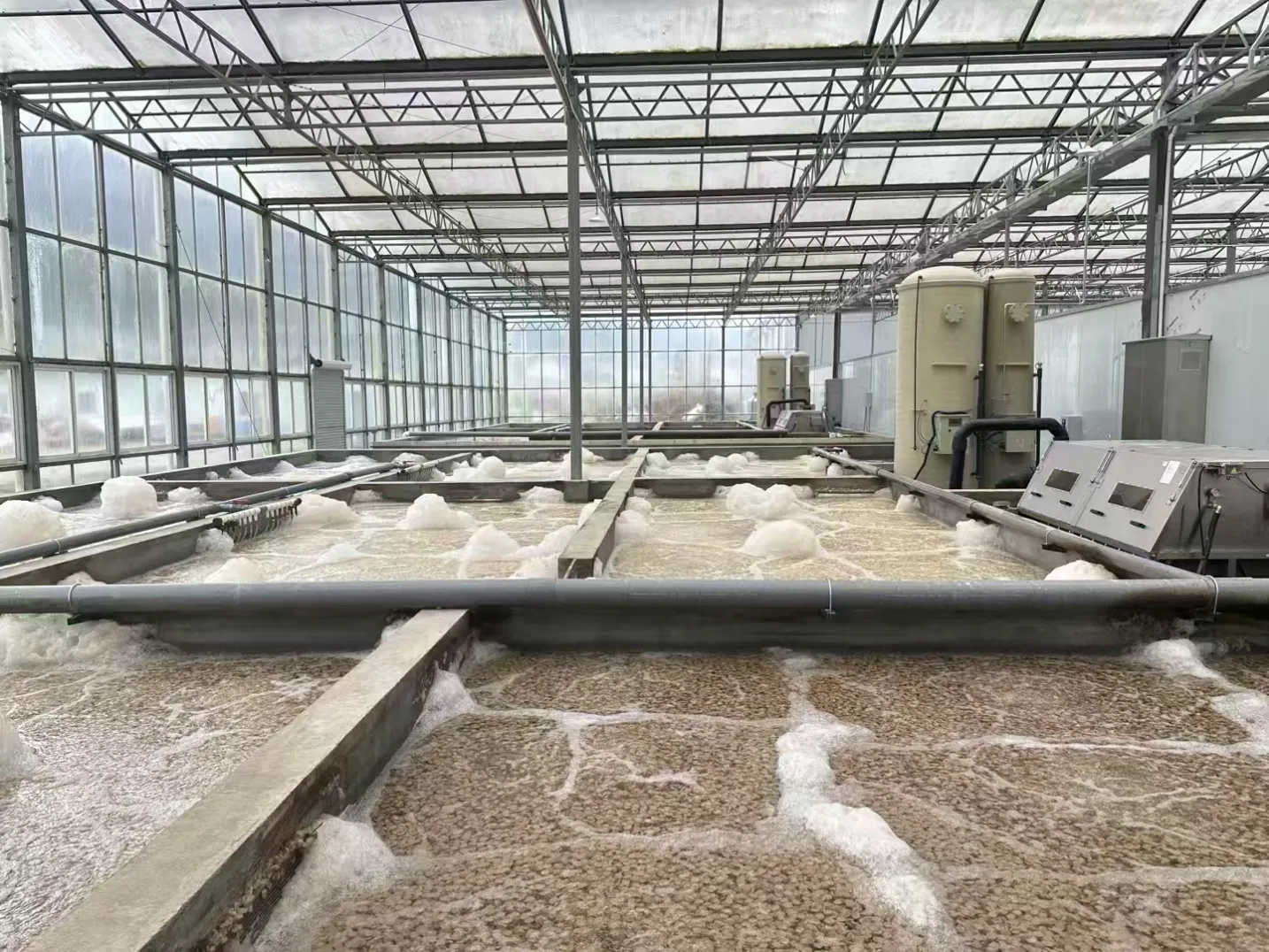
A drained RAS biofilter does not restart from zero — but there is no fixed number of days for re-maturation either. If the media stayed wet, unfrozen and uncleaned, a useful nitrifying population usually survives and the filter can come back faster than a brand-new one; if the media dried out, was pressure-washed or disinfected, you are effectively starting again. Published guidance puts a new biofilter at roughly 4–8 weeks from first seeding to ready, so treat that as the slow end of the range. The only reliable answer in your system is the ammonia and nitrite curve after restart, not a calendar date.
What "re-mature" actually means
A mature biofilter is a stable population of nitrifying bacteria living on the media surface: ammonia oxidisers convert ammonia to nitrite, nitrite oxidisers convert nitrite to nitrate. "Mature" means that population is large enough and stable enough to hold ammonia and nitrite near zero at your normal feeding rate. Restarting after a drain does not change that definition — it only changes how much of the population is still alive when you refill.
The four restart situations
| What happened to the media | What is probably still alive | Relative re-maturation | First thing to check |
|---|---|---|---|
| Stayed wet, in the system, aeration kept running | Most of the biofilm; some die-off in the top layer | Fastest — days to a couple of weeks | Ammonia after the first feed |
| Drained but kept damp and shaded | Much of the biofilm survives; outer layers stressed | Faster than a new start, slower than the row above | Nitrite lag — second-stage bacteria recover more slowly |
| Dried out completely, or frozen | Biofilm largely dead; spores and hardy cells only | Close to a new start | Full fishless cycling curve |
| Cleaned, pressure-washed or disinfected | Biofilm removed or killed | A new start, whatever the media age | Full fishless cycling curve |
The table is a guide to expectations, not a promise. Temperature, pH and alkalinity move every row: nitrifiers work slowly in cold water, and a system with low alkalinity will stall as nitrification consumes it. The stoichiometric demand is about 7.14 mg of alkalinity (as CaCO₃) for every mg of ammonia-nitrogen oxidised — a formula to check your own water against, not a dose to apply blindly. Keep alkalinity near 150 mg/L during cycling, the level used in published biofilter startup guidance, and top it up with sodium bicarbonate as it is consumed.
The restart sequence that works
Do not restock on a date. Restock on readings. The sequence below is the fishless-cycling method described in SRAC Publication 4502, How to Start a Biofilter, adapted for a restart:
1. Refill, circulate and check the basics. Get water moving through the biofilter, confirm the media is fluidising or wetted as designed, and check temperature, pH, dissolved oxygen and alkalinity before adding anything. Fix the water first: cold, acidic or low-alkalinity water will make every later step look like failure.
2. Feed the bacteria, not the fish. Add an ammonia source — ammonium chloride is the usual choice — to bring total ammonia to about 3–5 mg/L, then wait. When ammonia falls back to about 1 mg/L, add again to bring it back to the same level. Each cycle grows the population a little further. Keep feeding the bacteria this way until both ammonia and nitrite clear to near zero within a day of a dose.
3. Watch nitrite, not just ammonia. Ammonia usually clears first. Nitrite is the slow step: the nitrite oxidisers grow more slowly than the ammonia oxidisers, and a nitrite spike after restart is the most common reason fish are stocked too early. Our guide to the nitrite spike in the first 24 hours explains why that spike is dangerous — read it before you decide the filter is ready.
4. Do a load test before stocking. Dose ammonia to your target level one more time and confirm that both ammonia and nitrite return to near zero within 24 hours. Only then stock, and stock lightly at first: feed at a fraction of the normal rate for the first week and keep testing daily. A filter that clears a test dose is ready; a filter that clears it slowly is nearly ready, and a week of light feeding is cheaper than a fish kill.
If the media stayed wet, you may find the filter passes the load test within days. If it dried out, expect the full curve: ammonia rises and falls first, nitrite rises later and falls last, and the whole process takes weeks. That shape is the same for a new filter and a dried-out restart, which is why the readings matter more than the history.
What about bacteria additives?
Commercial nitrifier products are widely sold for restarts, and the honest answer is that they can help and they cannot guarantee a date. A good product adds live nitrifying bacteria, which can shorten the slow phase; a poor one adds the wrong organisms, or dead ones, and changes nothing. No additive turns a dried-out filter into a mature one overnight, and no supplier can honestly promise a fixed number of days for your water, at your temperature, on your media.
Judge an additive by the curve: if ammonia and nitrite clear faster after dosing than before, it helped; if not, it did not. Seeding with mature media from a running system is the most reliable shortcut, but weigh the biosecurity risk before moving media between systems.
The readings that say "ready"
A filter is ready to stock when all of these are true at the same time, not just one of them:
- Total ammonia holds near zero for 24 hours after a test dose of 3–5 mg/L.
- Nitrite also holds near zero over the same 24 hours — not merely falling, but gone.
- Alkalinity is stable and pH is not drifting down between top-ups.
- Dissolved oxygen in the biofilter stays in the range the system was designed for, with no unexplained drop.
If any one of these fails, the filter is not ready, whatever the calendar says. Keep cycling, keep the temperature as warm as the species allows — nitrifiers grow faster in warm water, roughly 25–28 °C is the range used in published cycling guidance — and retest. Our RAS biofilter troubleshooting guide covers the solids and oxygen problems that most often masquerade as a slow restart.
Mistakes that add weeks to a restart
Stocking on a date, not a reading. The most expensive mistake. A restart that needed two more weeks of cycling will not forgive a full stocking on day seven.
Cleaning the media "while the system is down". A drained system is a tempting moment to pressure-wash the media. It is also the moment that turns a fast restart into a new start. If the media must be cleaned, clean only part of it, and never with disinfectant unless the system genuinely needs sterilising — in which case, plan for a full new cycle.
Changing the media during a restart. A restart is the wrong time to swap media types or add a large volume of new media: the new surface has no biofilm, it dilutes the mature surface you still have, and it makes the readings harder to interpret. If you are adding media to grow capacity, do it after the restart is proven — our guide to increasing RAS biofilter capacity without expanding tank volume covers how to add surface area without destabilising a running filter. HNS manufactures both HDPE MBBR media and hydrophilic sponge media — the sponge carrier (NovusPore sponge media) is supplied with a surface area above 5,000 m²/m³, porosity above 98% and biofilm formation in 3–7 days as product data — but that is biofilm forming on the media surface, not a promise that a whole system is ready to stock in a week. The load test still decides.
FAQs
How long does a RAS biofilter take to re-mature after being drained?
There is no fixed number. Media that stayed wet and shaded can re-mature in days to a couple of weeks; media that dried out or was disinfected needs a full new cycle, which published guidance puts at roughly 4–8 weeks. The ammonia and nitrite curve after restart is the only reliable answer.
Can bacteria additives speed up a RAS biofilter restart?
An additive with live nitrifiers can help, but it cannot guarantee a date, and a poor product changes nothing. Judge it by whether the ammonia and nitrite curve clears faster — never stock on the strength of a product label.
Why is nitrite still high when ammonia is already zero after restart?
Nitrite oxidisers grow more slowly than ammonia oxidisers, so nitrite is almost always the slow step after a restart. Keep fishless cycling until nitrite also clears within 24 hours of a test dose.
Should I clean the biofilter media while the RAS is drained?
Avoid it unless you have a specific reason. Cleaning removes the biofilm you are trying to keep, and pressure-washing or disinfecting turns a fast restart into a new start. If cleaning is unavoidable, clean only part of the media and plan for a full cycling curve.
Get a media quantity and sample check: if you are restarting with new or additional media, tell us your tank volume, media type and fish load and we will check the quantity and a sample for you — contact us.