Tube Settlers vs Plate Settlers: Which Lamella Clarifier Fits Your Wastewater
Tube settler or plate settler? A vendor-neutral guide to choosing by solids type, grease and ragging risk, and retrofit fit — plus when neither fits.
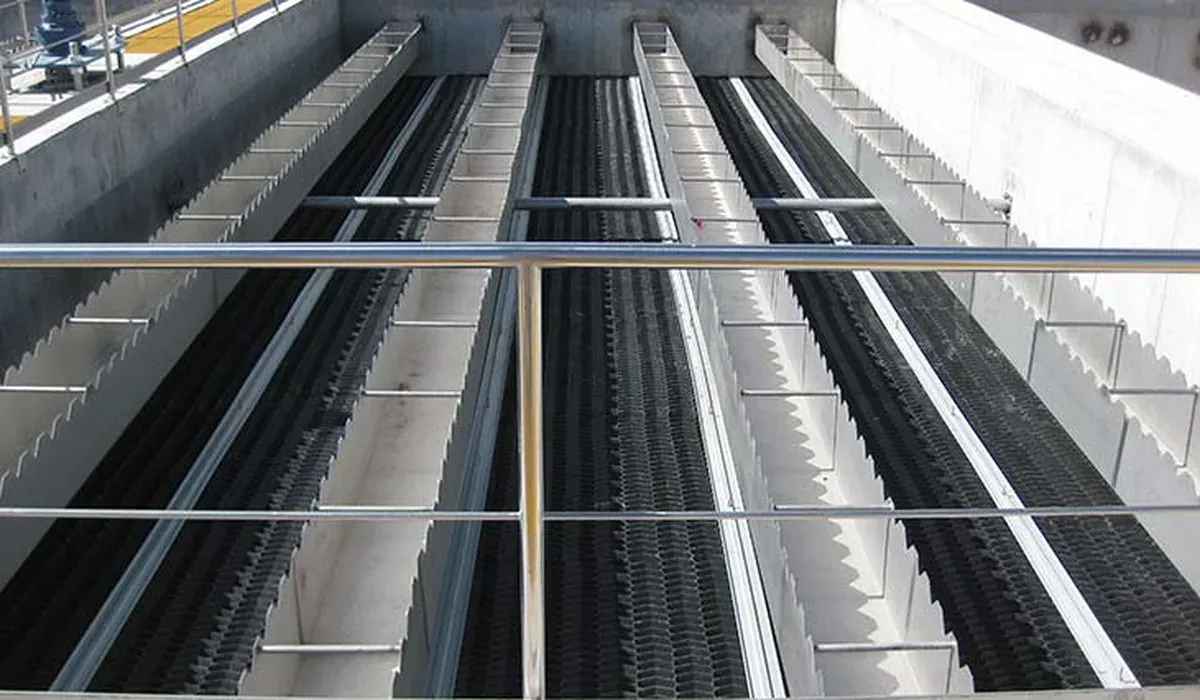
Choose tube settlers for heavy, well-flocculated solids free of grease and fibres, in a rectangular tank where the media can be lifted out. Choose plate settlers for sticky or variable solids, where cleaning access matters more than maximum area. With a lot of free oil and grease, or light solids that will not settle at all, choose neither — either lamella type will disappoint, and flotation or better upstream treatment is the honest answer.
Both shorten the distance a particle must fall before it reaches a surface and slides into the sludge zone, so a clarifier separates solids in a much smaller footprint than an open tank. The difference is the surface shape — small inclined tubes, or flat plates — and that shape decides how each type handles sticky solids, how it is cleaned, and which tank it fits.
What Each One Is
A tube settler is a pack of inclined tubes, usually installed at a typical angle of 60 degrees. Water flows upward while solids settle onto the tube wall and slide down. Small channels fit a large settling area into a small volume. HNS manufactures tube settler media at its own factory in Yixing, in three channel sizes: HNS-TS35 (35 mm channel, specific surface area 109 m²/m³, weight 18 kg/m³), HNS-TS50 (50 mm channel, 87 m²/m³, 19 kg/m³), and HNS-TS80 (80 mm channel, 50 m²/m³, 19.5 kg/m³). Typical service life for all three is 5 to 10 years — a product-data figure, not an effluent promise.
A plate settler is a stack of flat inclined plates. Water flows upward between the plates while solids settle and slide down. The gaps are wider than a tube channel, individual plates can usually be inspected and cleaned more directly, and plate packs are generally heavier and more rigid. HNS sells tube settlers, not plate settlers, so no plate specifications are given here — the plate side is generic, from the standard textbook description.
Neither type creates settling where none is possible: if the floc is too light, too weak, or too fine, it will pass through tubes and plates alike.
The Decision Flowchart: Three Questions in Order
Work through the three questions in order; the first clear answer usually decides the choice. Do not start with price or settling area — both are secondary to whether the solids will slide.
1. What kind of solids are arriving?
Heavy, well-flocculated solids that settle readily in a jar test suit either type, and tube settlers are often the compact choice. Light, fluffy, or poorly flocculated solids suit neither type well until the upstream process is fixed — better coagulation and flocculation, or better biological settling control.
Sticky solids change the answer. Fats, oils, fibres, and biological growth coat inclined surfaces, so settled solids stick instead of sliding. In a tube pack, a stuck layer narrows the channel, and each layer makes the next stick more easily. In a plate pack, wider gaps are generally easier to inspect and wash, so for sticky or variable solids, plates have the practical advantage. See our article on why sludge sits on tube settlers for how fouling builds up.
2. Is there a fouling, grease, or ragging risk?
Apply question one to the worst day, not the average day: wastewater that is clean most of the time but carries grease after a washdown, fibres after a production change, or rags past a worn screen will foul a tube pack at exactly the moment the plant is busiest.
Screening that removes rags and fibres, and grease removal ahead of the clarifier, protect either type — see our guide to screening selection. If grease loads are significant and cannot be reduced upstream, step back: gravity clarification is often a poor fit, and the right comparison becomes lamella versus flotation, covered in our article on DAF versus lamella clarifiers.
If the fouling risk is moderate, tube settlers remain workable — but choose a larger channel. A smaller channel gives more area but fouls more easily; a larger channel tolerates sticky solids better and flushes more easily. In HNS sizes, that means: TS35 suits clean, well-flocculated solids; TS50 is the middle choice; TS80 suits heavier, stickier, or more variable solids, at the cost of less area.
3. What shape is the tank, and can the media be cleaned in place?
Tube settler modules are light, modular blocks cut and fitted into rectangular tanks — a natural fit for a rectangular retrofit, where modules can be lifted in, lifted out for cleaning, and replaced section by section. See our tube settler retrofit guide for the data a retrofit should start from.
Plate packs are heavier and more rigid, and harder to cut to an awkward shape. They suit a new-build tank designed around them, or a rectangular tank with enough access to lower a rigid pack in and lift it out again. Where access above is poor — low headroom, no lifting point, no way to drain down — cleaning access decides the choice regardless of the solids: pick whichever type the operators can actually reach, wash, and inspect.
Tube vs Plate at a Glance
| Factor | Tube settlers | Plate settlers |
|---|---|---|
| Settling area per volume | High — small channels pack more area into the tank | Lower — wider gaps between flat plates |
| Sticky solids, grease, fibres | Foul more easily; larger channels help but do not fix light floc | Generally easier to inspect and wash; wider gaps tolerate sticky solids better |
| Cleaning | Modules can be lifted out section by section; hosing and air scour where fitted | Individual plates can usually be reached and washed directly; pack is heavier to lift |
| Retrofit fit | Light modular blocks suit rectangular retrofits | Rigid packs suit new-build or well-planned rectangular tanks |
| Weight and handling | Light per cubic metre (HNS tube media: 18–19.5 kg/m³) | Generally heavier and more rigid |
| When it wins | Clean, heavy, well-flocculated solids; tight footprint; rectangular tank | Sticky or variable solids; cleaning access matters more than maximum area |
When Neither Fits
Saying no to both types is sometimes the correct answer — cheaper before the media is ordered than after it is installed.
Choose flotation instead for significant free oil and grease, or light solids that float rather than settle: a dissolved air flotation unit lifts those solids to the surface instead of asking them to sink. Do not force a gravity clarifier to do a flotation job by adding more media area.
Fix the upstream process instead when the floc is too light or too weak to settle. More settling area does not make a non-settling particle settle. Check coagulation and flocculation first.
Reconsider the clarifier when flow peaks are the problem. A clarifier that performs well at average flow can lose solids during peaks, washdown, or batch discharge, because upward velocity rises with flow. Size against peak flow, not daily average — see our lamella clarifier sizing guide. If peaks are extreme, flow equalisation upstream may matter more than the choice of media.
Also reconsider when sludge removal is the weak point. If the hopper is too shallow or the pump runs too rarely, solids accumulate under the media, go septic, and produce gas that lifts solids back up. That looks like a media problem but is a removal problem, and changing from tubes to plates will not fix it. Our guide to measuring the sludge blanket and solids covers the checks to run first.
What to Send for a Fit Check
Whether the answer is tubes, plates, or neither, the same data decides it. Send average and peak flow, influent and target suspended solids, sludge type, any oil, grease, or fibre load, tank shape and dimensions, headroom and lifting access, and how sludge is removed today. With that data, a supplier can check whether the solids will settle, whether peak-flow loading is workable, and which channel size fits the fouling risk.
FAQs
Can plate settlers replace tube settlers in an existing tank?
Sometimes, but it is a new design exercise, not a swap. Plate packs are heavier and more rigid than tube modules, so the support structure, lifting access, and infill around the edges all need checking. Check tank dimensions and access first.
Do tube settlers work for oily wastewater?
Poorly, in most cases: oil and grease coat the tube walls, so solids stick instead of sliding and channels narrow. Improve grease removal upstream first; if the load stays significant, consider flotation instead.
Which lasts longer, tube settlers or plate settlers?
There is no single answer, because life depends on the wastewater, the material, and how the pack is cleaned. For HNS tube settler media, the product-data figure is a typical service life of 5 to 10 years. Ask what conditions any plate-life figure assumes.
Is a smaller tube channel always better because it gives more settling area?
No. A smaller channel gives more specific surface area — 109 m²/m³ for the 35 mm HNS channel, against 50 m²/m³ for the 80 mm channel — but it fouls more easily and is harder to flush. For sticky, heavy, or variable solids, the larger channel is usually better despite offering less area.
Talk to Us Before You Choose
If you are choosing between tube settlers and plate settlers, send us average and peak flow, solids type, grease and fibre load, and tank dimensions. We will tell you honestly whether tube settlers fit, whether a larger channel is the right call, or whether neither type is the answer. Reach us through our contact page for a free sizing, quantity, and sample check.